Hadassah Hospital in Jerusalem is worldwide known for its extraordinary medical achievements, saving and improving lives of people from all over the world. As I visited the hospital for a minor medical checking, I was impressed by the friendliness of the people and the feeling that I am in the middle of the huge factory of people working without break to save lives. Young girls were distributing for free kosher food to the patients and everyone was friendly and keen to help us to find the right directions.
But there is something else that you can find inside the hospital, probably less known for many of the people coming here: the Chagall synagogue.

The entrance is made from inside the hospital, at the ground level. After paying a ticket and receiving an audio guide and an explanatory leaflet, you have to slowly close and open your eyes for entering in a different world of colours and lights. The 3-meter high panels, made of 144 pans of glass represent the 12 tribes of Israel. Every one is a small world in itself of Chagall work. Inspired by the Biblical sources of Jacob's blessings of his 12 sons and of Moses own blessings for the each of the 12 tribes. Each has a dominant colour and is represented by one of the 12 distinctive gems on the breastplate of the Grand Priest and is built around the specific blessing attributed to them.

'All the time I was working, I felt that my father and my mother were looking over my shoulder and behind them were Jews, millions of other vanished Jews of yesterday and a thousand years ago' wrote Chagall after the work - that he considered his gift for the Jewish people - was finished. The works lasted for 2 years and the painter himself took part at the official inauguration.

His assistant, Charles Marq developped a special technique allowing the use of more than 3 colours on a single pan rather than the usual procedure of one colour separated by a lead strip. The stained glass was created in Chagall's workshop in France.

Chagall studied at length the place, trying to find the best way for a proper reflection of the light through the colours inside the synagogue. The rest of the space is simple, with a stone floor which serves to receive the projections of the colours during various times of the day.

The decorations of the Aron Kodesh were made by the American-Israeli artist Aviva Green and she finished the work requested by Hadassah together with another Israeli artist, Ruth Hayatt, specialized in textil art. The aim was to offer a simple contrast to the colours of the stained glass, by using simple materials, such as natural fibers and organic contexts.

During the Six-Day War in 1967, shrapnels of the Jordanian Army destroyed four of the panels. It is said that Chagall, still alive at the time said: 'Don't worry about the windows! Worry about Israel. I'll make new windows!'. A year after, the damaged glass were replaced under the artist's supervision. Another massive reparations took place at the end of the 1980s that also considered the damage done by the specific Jerusalem climate and the other effects of war, the works being supervised by the son-in-low of Marq, Jacques Simon. The works lasted for one year almost.

The shtelt of Vitebsk where Chagall grew up is no more here, but his work and modest dedication will keep inspiring us. In the middle of a hospital whose achievements can make the world a better place, the delicate stained glass are a testimony of the victory of the spiritual world against all odds and tragedies of the last centuries.


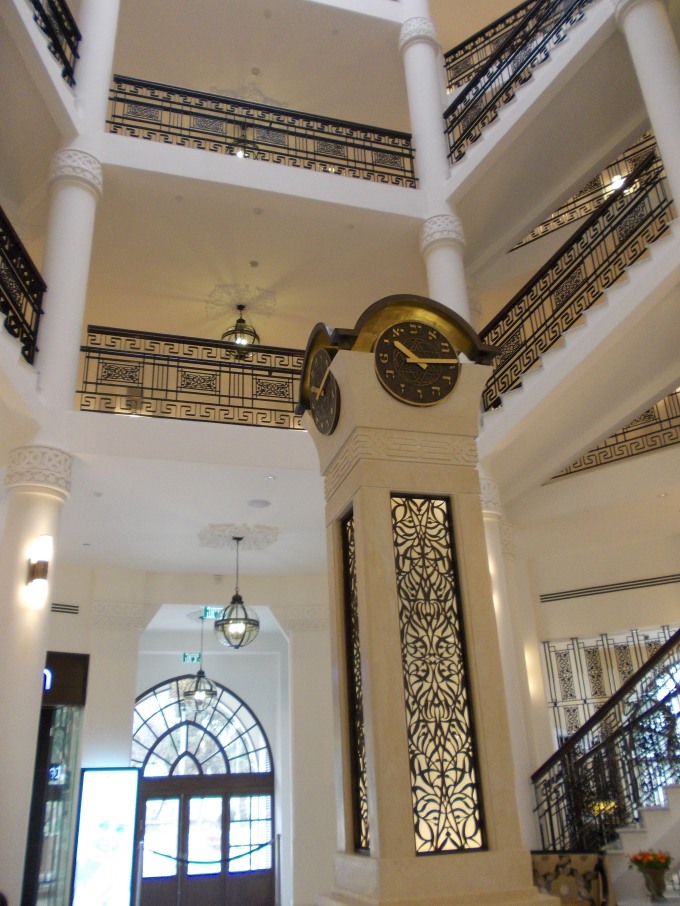
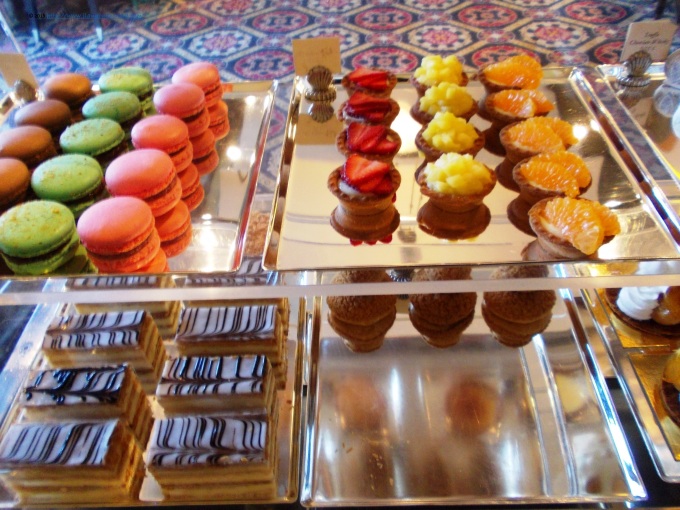
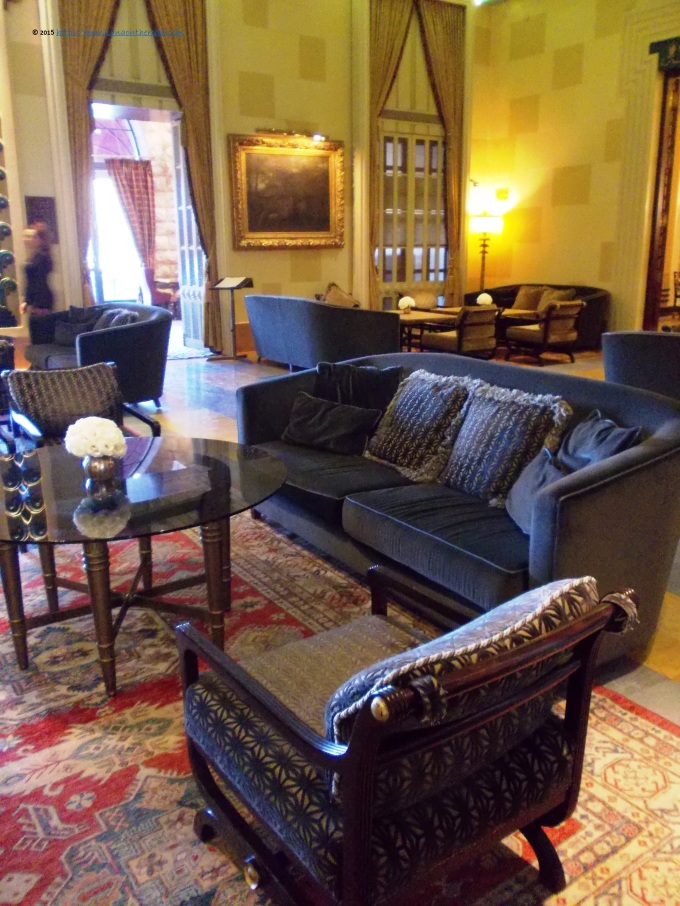 The interior design details were slightly changed since then, keeping the old Oriental charm in the carpets or wall glass decorations. The dark corners are an invitation to discretion and peace, outside the always busy outside world. Special visitors enjoy usually the quietness of the reading room, with its cakes, coffee and teas.
 In a place where high profile political figures, from Margaret Thatcher to Clinton family or Nicolas Sarkozy or the current American president or King Abdullah I of Jordan or many others, were always at home here, every object has its own history. For instance, this massive wooden table, where the peace with Jordan was signed that was especially traveled on to Cairo. If the wood would have the gift of talking, how many news will provide...And over the last century, the hotel assumed its high profile and VIP status. Which had a price to pay sometimes, as it happened in July 1946 when the British headquarters hosted in the Southern wing were the target of an attack.


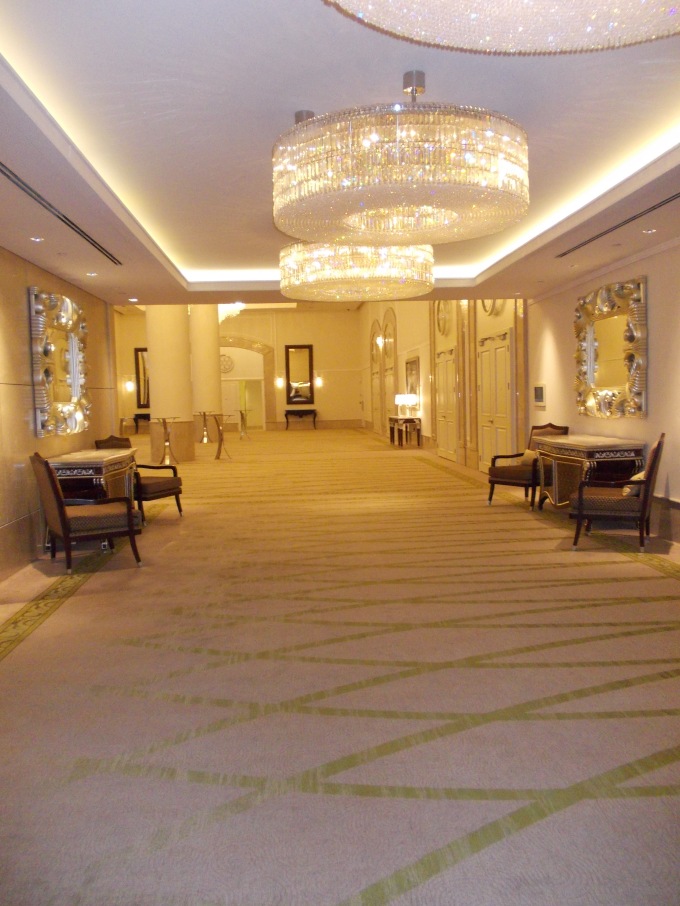
 For children, there are special babysitting services offered, unique gifts and tailored meals. From weddings - of up to 250 persons attendance - to various special events - like bat or bar mitzva - parties, the space can suit every special needs. There is even a special synagogue that can be used for unique occasions. The only condition is to make a reservation many months in advance, as the demand is very high.
  The wine collection has almost everything an expert and wine lover would expect. Enough to test and taste for a couple of years from now on. The prices are usually affordable, allowing also local people to have their unique moment of glory here.


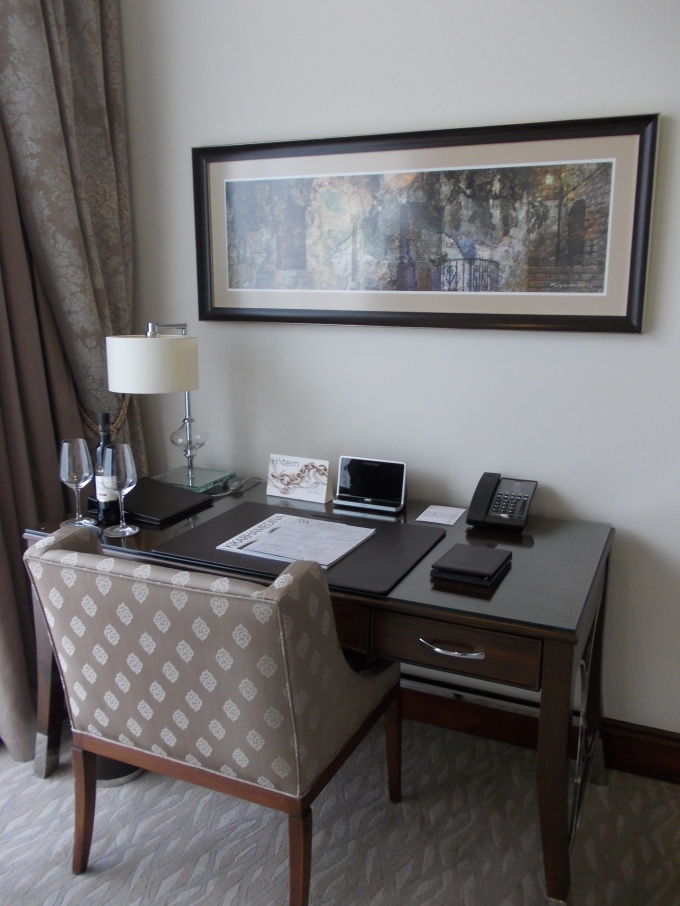
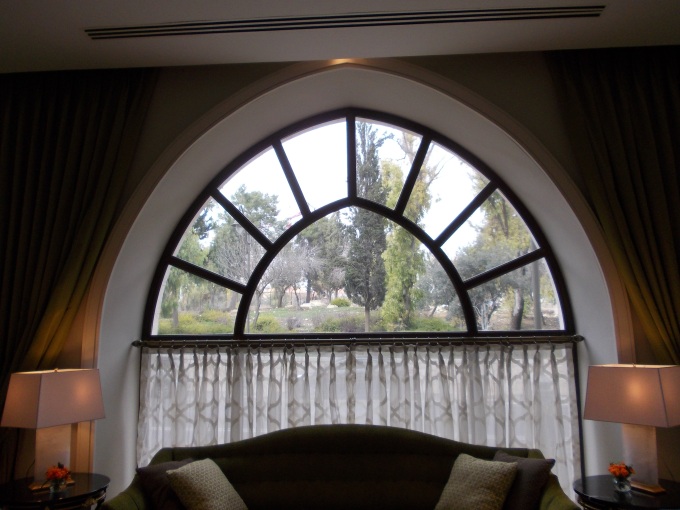
 The diversity of the rooms and suites offered answers a big is big and especially the big families with children are given a lot of choices. There is the Jerusalem Suite and the Royal Suite, the President and Deluxe Suite, the Executive and various Duplex suites. The views are different, but there is hardly a view that can be considered 'bad' in Jerusalem, as every corner may have its special history and special memories. For those interested to find out more, the hotel can book special tours made by recognized experts.
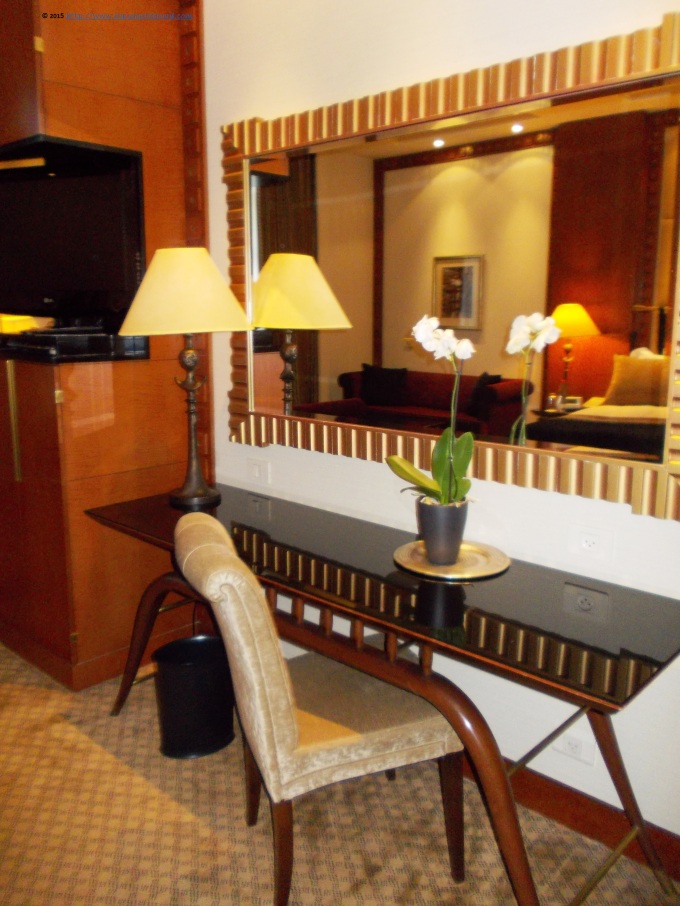 All the rooms are provided with wifi and at the top floors, the tv set is inserted in the bathroom mirrors. Sliding panels can extend or separate the spaces, in order to . A special concierge service is registering the requests of the customers before arrival trying to offer the best expectations. "Our customers, some of them frequent guests for over 30 years, know what they want. We just want to offer answer their demands", I am told by the representatives of the hotel.
 There are at least 6 volumes of signatures of the famous guests of King David Hotel. From private political meetings to VIP family gatherings and film shooting - Exodus was filmed here in 1960 - this hotel has a lot of stories to tell. The secret of its survival despite various hotel trends and fashions and boutique temptations: building a brand and keeping the stories in. Like the city of Jerusalem itself.