Showing posts with label luxury travel. Show all posts

Afternoon tea chez The George Hotel Hamburg

It was a long time since my last afternoon tea, a project I started a couple of years back, aimed to feature the best high teas in Berlin and abroad. It was a long time also since my last visit to Hamburg, a city that always surprises me, no matter how much time I spend here. In the last days of 2016, I decided to offer myself a double surprise: a trip to the fancy Northern port of Germany and an afternoon tea at The George Hotel. After a fast-forward tour of the city, the British warm of the lounge welcomed us in shades of pastel and an invitation to relaxation.
Situated relatively close from the train station and the central area, in the colourful St. Georg neighborhood, the four-star The George is a oasis of style and well-being, with its 125 rooms and British charm.  
The afternoon tea is offered at DaCaio Italian restaurant, at the ground floor. As I visited during the high winter season, I choose to make a reservation one day in advance, to be sure that we don't have to wait and we have a secured seat. However, this is a practice I recommend always, as it is good to know that there are no surprises, just in case the hotel is hosting some events or just there are no places left.
The service was very fast and welcoming, with children seat available. The pleasant music and the inviting ambiance, created a perfect bubble to relax and enjoy the best in life. More to come...
The three-tiered rack brought on the Moroccan-like round tables had at each level a bit of pleasant surprises. First, the sandwiches with salmon and fresh olives - I loved the filling but wasn't very impressed by the bread, or maybe the sandwiches were a bit too big for my expectations. Second, the fresh home-made scone - the perfect pastry was only opening the appetite for more, but good things in life are not coming in plenty - combined with the equally perfect intense clotted cream. Not forget the orange marmalade, also fresh and with the right balance between sweetness and the natural sprinkling sourness of the fruit. 
With so many different challenges for my palate, it seems that I was inspired to order Gyokuro Asashi Tea, a bit neutral with sour accents; it brought very well the right taste balance after so many bits of different foods.
And it was more, although in small bites: the tiramisu in a small glass, with its layers balancing each other coated in a layer of cocoa; the dense creme brulee, and the fruits coated in chocolate - the choice for pineapple for instance was an unexpected pleasant surprise. 
The cost of the afternoon tea is 21 EUR. If you want the option of a glass of champagne, it gets a bit pricier. 
After a long break, coming back to the healthy high tea habits was a good choice. And choosing The George Hotel was a wise - and tasty too - move.
Cheers to many more afternoon teas in 2017!

The Ritz-Carlton Wolfsburg and the German definition of luxury

Image
Since living in Germany, I keep wondering about how luxury is usually defined and manifested in the daily life. In most cases, I noticed nothing compared to the usual extravaganza and glamour, you can encounter in Paris or LA, for instance. Instead, there is a certain modesty and measure in showing off your wealth to the world. This state of mind is reflected also in the design and general philosophy of big hotels. The more stars a hotel have the more contended is the exhibition of wealth. The results can be very interesting, as it is the case of the newly redesigned The Ritz-Carlton Wolfsburg which welcomes the visitor with a oasis of green, in the middle of the famous thematic park of Autostadt, the communication platform for the Volkswagen Group. The Autostadt theme park, the second largest and famous in Germany, attracted more than 27 million visitors, since its 14 years of function, many of them businessmen and high-end tourists. At the first sight, the decision to open here first one of the two Ritz-Carlton Hotels - the other one is situated in Berlin - in such a 'secondary' location might be surprising, but it rather express a sophisticated knowledge of the real state of arts of the luxury business in Germany.
Image
The renovation lasted from August 2012 to November 2013, the redesign being developed by Autostadt in cooperation with Paris-based American architect Elliott Barnes. Those who previously visited the hotel will not find a radical transformation of the location though, as the architect and its team tried to keep in line with the initial plans developed by the French designer Andrée Putman. The original sense of ambiance was kept but translated into a simpler architectural language. 'Our goal was to bring this philosophy up-to-date and permanently establish the hotel at the high end of the global industry', explained the new philosophy Autostadt Creative Director Dr. Maria Schneider, according to a press release of the hotel.
One of the most iconic and easy to remember detail of the hotel is the newly designed lobby, with its bamboo-like curtain of illuminated glass tubes that embodies an abstract forest. It is the perfect anchor point that can start the stay and your personal experience at The Ritz-Carlton.
Image
In the center of the room, a further separation of the space is made by the large while marble fireplace that brings not only the overwhelming feeling of tranquillity, but also integrates one of the main branding elements of the hotel: 'feeling home while far away from home'.
Image
While I am waiting in the lobby, my eyes are moving from a part to another, recording the very small details of the decorations and design concepts: the golden intarsia of a black round table, the reflection of light into the blue walls, the comfy chairs with delicate curves.
Image
The combination of glass and traces of gold is elegant yet creates a certain dialogue and intimacy, as it does not overwhelm the visitor with its opulence.
Image
My best location is near the window, from where I can have a perfect view over the landscape. The industrial constructions such as the historic Kraftwerk - don't expect beauty from the industry, isn't it? - are embellished by the small artificial green islands in the middle of the water. Despite being a place for high-end industry and business, the Autostadt is conceived as a predominantly green area, with hills and relaxation area and many garden with small family of ducks slowly making their way through the shadow of big towers stuffed with latest generation of Volkswagen cars. This landscape allowed a good creative playground for the designer who presented his concept according to the latest issue of Autostadt Magazine as follows: 'I envision the Autostadt as a park with pavilions, which I associate with follies in French baroque gardens. These smaller structures lead to the main building. In this metaphor, The Ritz-Carlton becomes a castle framed by buildings in a beautiful garden'.
Keep in mind the idea of 'French follies', ok?
Image
Before having a full tour of The Ritz-Carlton, I stop for the afternoon tea. A perfectly smoked Sencha tea, with a glass of champagne - the non-alcoholic apple-based version is also available - and delicious treats getting more and more sophisticated from a tier to another. It starts with herbs-aromatized small sandwiches, continues with fresh scones with oranges and raisins, with marmalade, and continues with the perfect afternoon tea cakes: apple, oranges and chocolate flavours. The service is perfect, the ambiance and the background music likewise. I can stay there for the rest of my life, but I should keep my schedule for the day, and discover more secrets of the hotel.Image
My tour starts with a small space aimed to offer even more privacy: a library, with comfy chairs and the round tables typical for the newly designed furniture of The Ritz-Carlton. The predominant line of the furniture is a mix of old and new design classics.
Image
Close to the lobby is situated the design shop, offering branded items, selected wines as well as various wellness products. Vouchers can also be purchased and used.
Image
The products distributed here are aimed to reflect the high standards of luxury of the hotel. Many, as in the case of Neom series, are used in the spa as well.
Image
On the occasion of the new opening, The Ritz-Carlton proudly announced the purchased of more than 600 works of art, including works by Robert Mapplethorpe, Arnold Newman, Elger Esser, Guenter Foerg or Rolf Rose. The works of art previously displayed in the upper-level hallways were relocated now in the guestrooms and suites. Elliot Barnes chose to have the art exposed on narrow shelves installed above the sofas, integrating the piece of art in various casual arrangements that can change as often as possible. As I pass through the lobby hall, I notice the black-and-white works of the local photographer Henry Heidersberger. Another photographer whose work was bought for The Ritz-Carlton collection is the Salzburg-based Agnes Forsthuber.
Image
The new stop is at the deli, a new addition to the hotel, where extraordinary good looking cakes are screaming 'temptation' from all their colourful corners. The star of the foodie collection is the famous Carlton cake, developed on the base of 20 recipes from chefs around the world. Created as a tribute to the hotel's founding, it contains, among others, Grand Marnier, orange confit and an elegant touch of gold.
Image
The rest of the deli area combines secluded private corners with excessive openness, encouraging communication and transparency. With so many sweet temptations, I imagine that it's almost impossible to refrain from asking your neighbour how his or her cake is tasting. The strongest friendships are starting as simple as possible.
Image
When the weather is perfect, like at the time of my visit, there is the Hafenterrasse, with a view of the swimming pool. Used for the breakfast and usually as an alternative to the restaurant during the day, it also has a winter terrace. But nothing compares to the quiet and tranquil view that you can have during an average sunny day.  Image
Welcomed by pleasant perfumes, I made my way to the spa. Where I am? Somewhere in a 1001-night tale? The word 'relaxation' is translated into added flavours and rays of light. The spa was the first part of The Ritz-Carlton that went through redesign, the work being finished two years ago by Angelika A.Vogt Corporate Styling. It targets the high-end customers of the hotel, in need of a serious rejuvenation and wellness after busy and sometimes long business meetings. The massages and body treatments are completed with organic products by Neom and The Organic Pharmacy. It has bath, sauna and steambath, with by choice, separate areas for men and women. The fitness area, equipped with modern machines, offers a perfect incentive to training: a view of the docks and the canal - the so-called 'Wolfsburg Riviera'. The swimming pool is kept at a constant temperature of 29C. Image
The Ritz-Carlton Hotel has 170 rooms, out of which 23 are suites. Each of the four floors of the hotel follows an unique colour scheme that characterized equally the corridors as well as the rooms and suites. Elliot Barnes followed the concept of an imaginary ascent to the top of a mountain. It starts with the valley (ground-floor), glacier (second-floor) and peak (thirds floor). The next - fourth - level reflects the clouds with light, a counterpoint to the heavy ambiance from the lobby. Image
All the tables in the rooms has a predominant oval shape. Replacing the previous massive desks, the message sent by this important piece of furniture is of openness and dialogue, either it is about talking business, coordinating a team or enjoying a quiet family evening. Every room looks like a fully equipped luxury apartment. The sophisticated technology is present too, but without being intrusive: you can manage all your connections and plugs from the retractable panel from the nightstand.Image
The bathrooms are fully equipped and very elegant, predominantly white with small traces of black. Butlers can be provided by request. In every space of the hotel, lightning is very important, and can be adjusted by the guests, from 'full' to 'soft'. Thus, you are free to make the right choice to determine your ambiance, and not given a space you should inhabit only. Image
Once you arrive at the fourth floor, you are entering the new Club Level. It provided personal concierge service, separate check-in and access to the Club Lounge. Image
Different menus are offered throughout the day. The Club Lounge is conceived as a living room where you can read, make the right changes to your presentation or read on sofa near the fireplace. Those interested to have private discussions can book conference rooms. Image
From the balcony, you can view the Autostadt with completely new eyes, and I suppose that the architect and its team spent a lot of time outdoors testing ideas and creating perspectives. Image
Another important concept of the design philosophy is the idea of room-in-room. Spaces can be easily created, either by the massive decorations or the comfy sofas or by the leather-covered headboards and sideboards frame of the beds or sofas. The overall style has a common denomination: genuine luxury, that can suit the cultural diversity of the guests. Although the majority are originally from Germany and German-speaking countries in general, an important number of guests are coming from China, Japan, Brasil, US or the Middle East. Image
On the fourth flour are also situated the 220-square metre Black and White Suites, keeping the signature of first designer of The Ritz-Carlton André Putman. The original black and white checkerboard tile pattern is integrated into the new design concept and can be often discovered either at the Spa, or in the lobby or in some of the rooms. Image
The couches might look small, but if you think twice you realize that are based on a perfect economy of space. The furniture is aimed to help the guest rest or do his or her job, without stealing from the freedom of movement of the rooms. The delicate edges of the furniture are continuing or communicate with the sources of light and the severity of the walls. Image
The Ritz-Carlton Wolfsburg has another precious gem: the multi-awarded restaurant Aqua, ranked on no.28 of the world's 50 best restaurant list S. Pellegrino and the gourmet journal 'Restaurant Magazine'. For the fifth successive year, Aqua is representing Germany at this event considered 'The Oscar's of the gastronomic world', as one out of only two German restaurants. The cuisine of the chef Sven Elverfeld, which I was introduced to, is characterized as a sophisticated harmony of aroma, special flavors and texture. Many of his dishes reconnect to a personal memory and tell an individual story about travel or some episode in the career of the chef. As Wolfsburg is only one hour away by train from Berlin, I am tempted to return for a personal experience of the cuisine.
Image
Although the main area of the restaurant was looking empty, I was able to hear the intense preparations for the afternoon opening in the background. Following the redesign plans, Aqua received an additional window that opens the space into a private garden area, where a large shell filled with water creates an ambiance of peace and serenity.
I left the hotel keeping in mind this picturesque ambiance for a long time. This is how you feel when you are truly at home, isn't it?
For more pictures and details of the Ritz-Carlton Wolfsburg Hotel, have a look at the dedicated Pinterest board: http://www.pinterest.com/ilanaontheroad/ritz-carlton-hotel-wolfsburg-germany/
Disclaimer: I was offered a tour of the hotel and invited to test the afternoon tea, but the opinions expressed in this article are, as usual, my own.

The secret of Berlin porcelain

Image
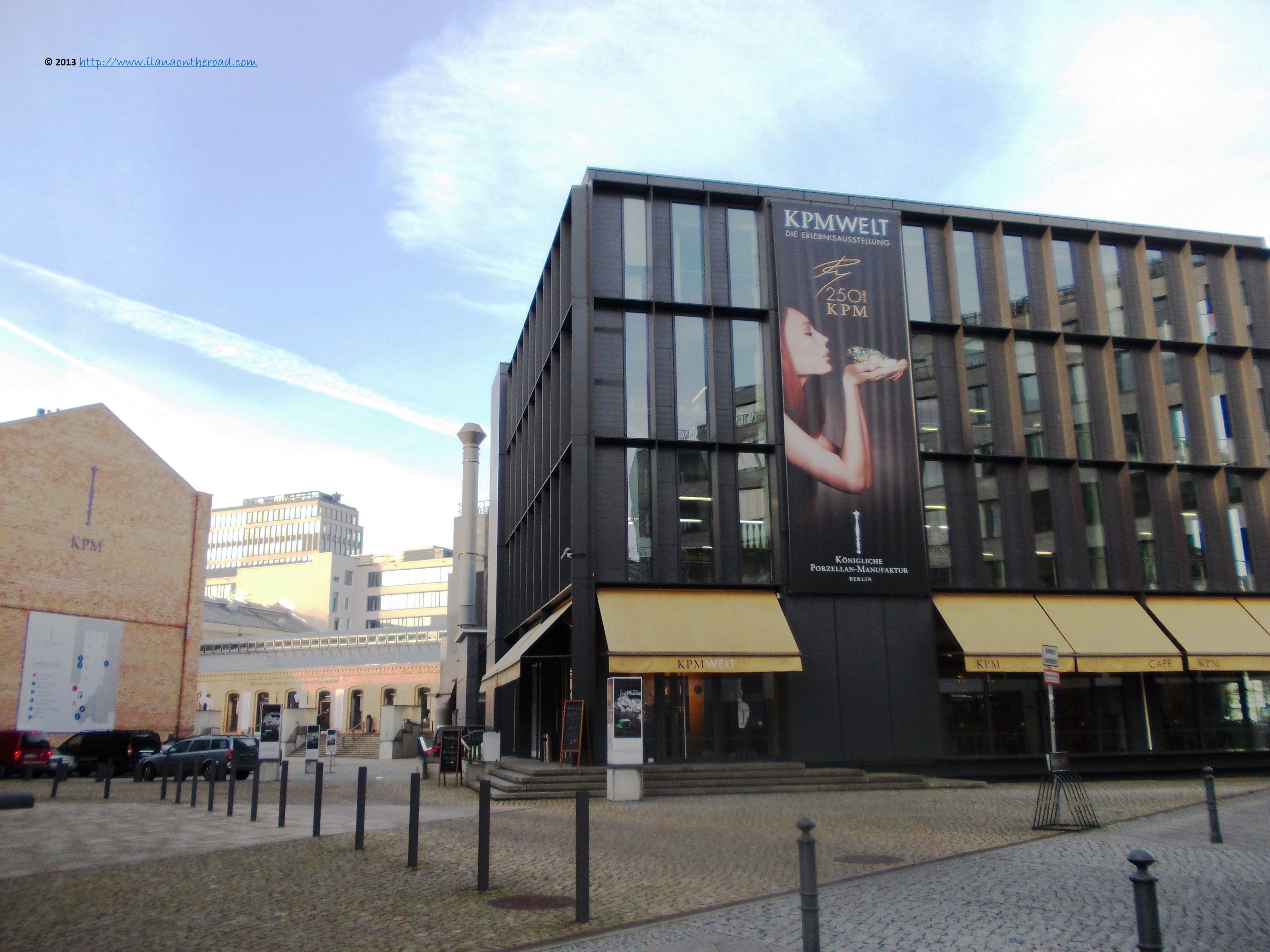
The Königliche Porzellan Manufaktur (KPM) - the Royal Porcelain Manufacture - is situated on Wegely street in the elegant Tiergarten district. Wegely was an intrepid businessman who requested to Friedrick II the privilege of setting up a manufacture as well as the exemption of custom duties, plus a building in Friedrichstrasse. More than interested in getting the best advantages of the 'white gold', the king acquiesced and in addition forbade the custom officials to look into his barrels, as part of the plan to keep the secrecy the recipe of porcelain. Centuries and many more histories after, the arcanum continues to be a well kept secret. The cobalt blue sceptre present on all the branding information of KPM continues to be after so many time a symbol of elegance and history of Berlin, 250 years after. The German Art of 'Tischkultur' ('Table culture') so popular even today in the middle-class Europe owes a lot to Friedrick the Great's involvement in supporting and promoting the development of porcelain in Berlin and Brandenburg area.
The original building is no more and the current factory was redesigned several times being considered as one of the only complex building in the city projected according to the principles of the pre-industrial revolution.
Image
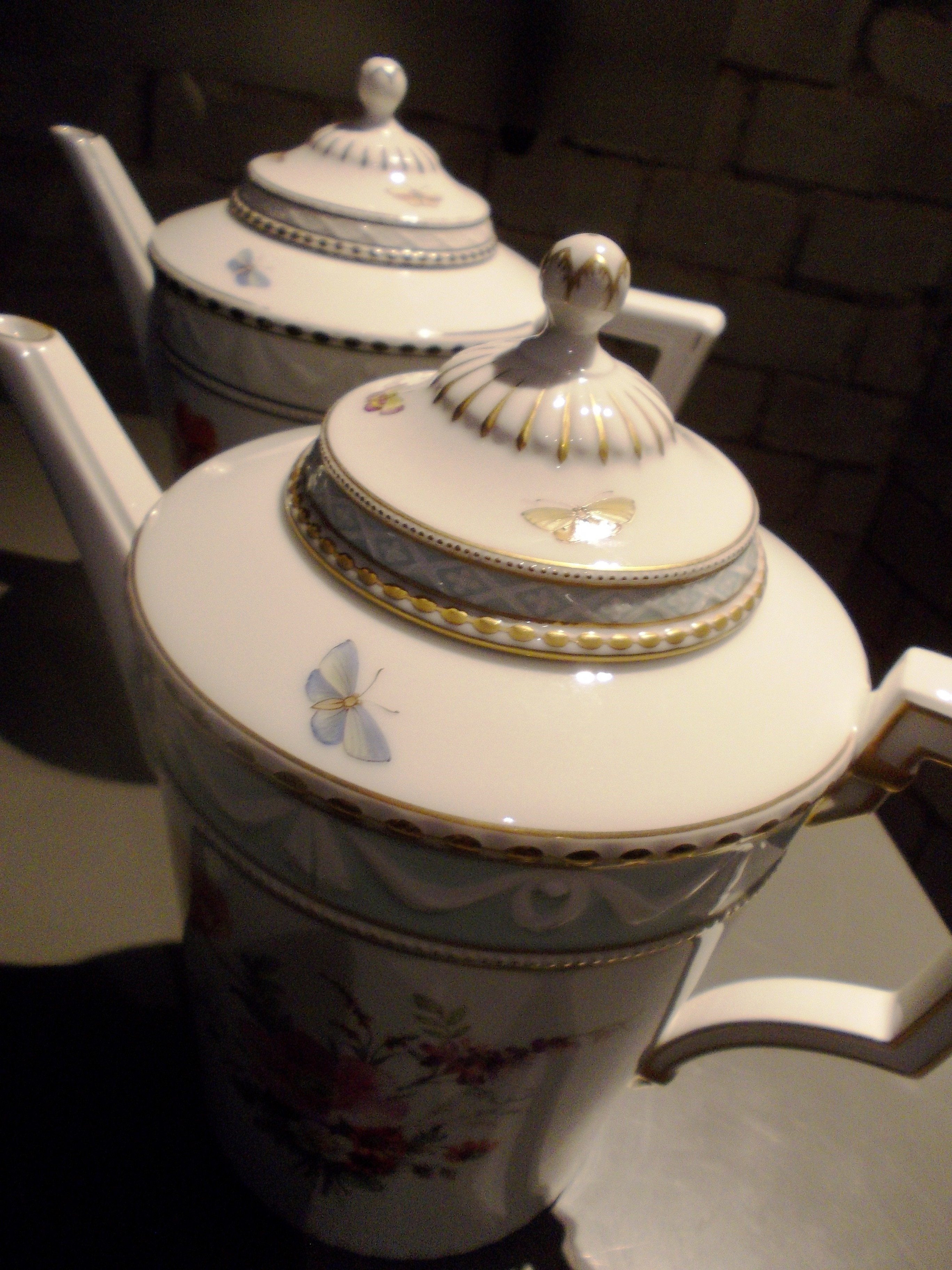
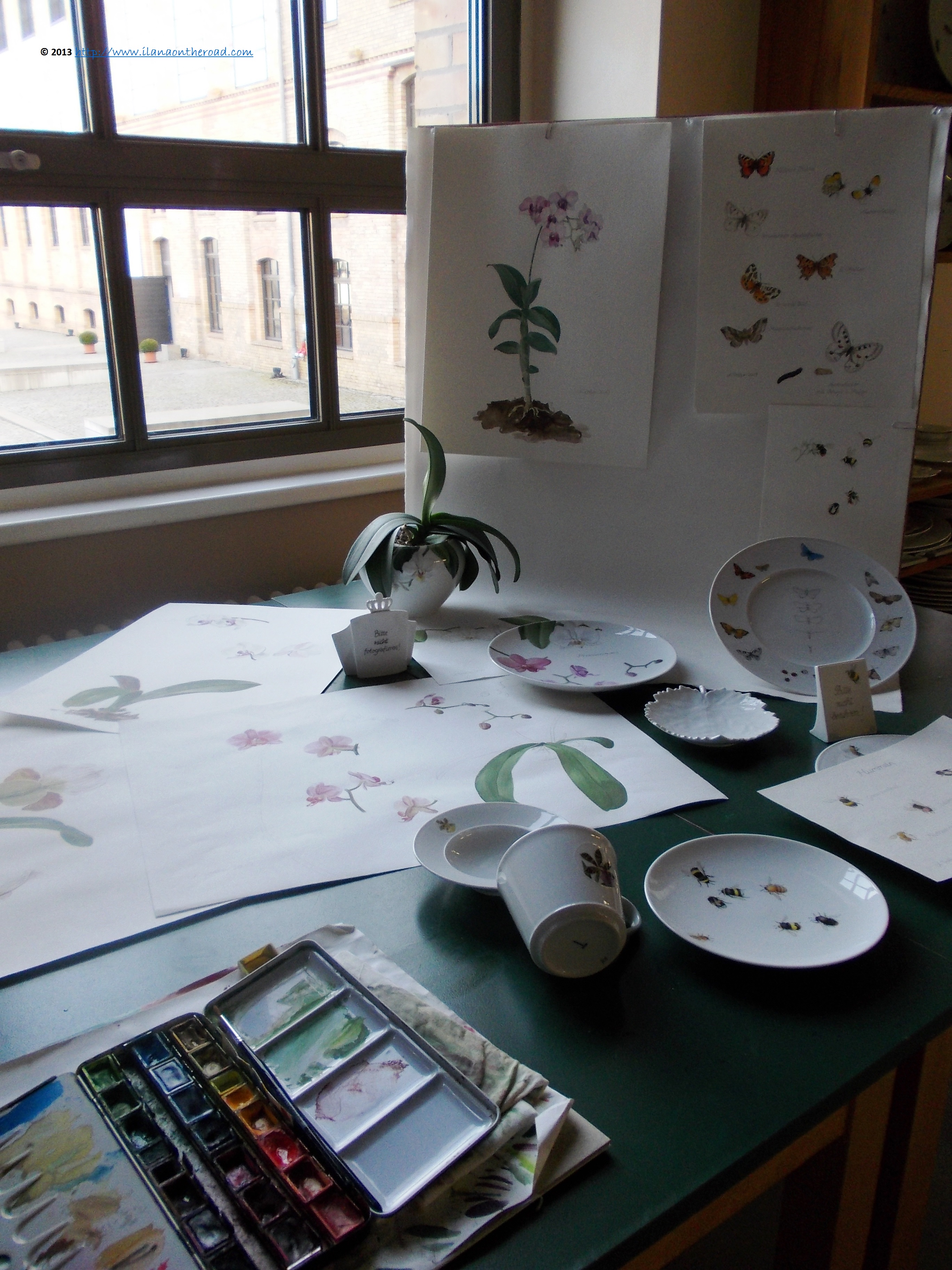
Every chief modeller of KPM, created its own pattern yet following the direct preferences of kings. The techniques developed in time as well, as for instance was the case with the cobalt blue, a porcelain 'glasur' aimed to resist at very high temperatures. But it seems that no other king like Friederick the Great was so much involved in the daily work of the manufacture. He was visiting the premises very often and requested special models. The story goes that one day, he saw a decorated porcelain with flowers and said that flowers without insects are not real. The next models still in use nowadays introduced discretely butterflies, bees and other insects as part of the landscape.Image
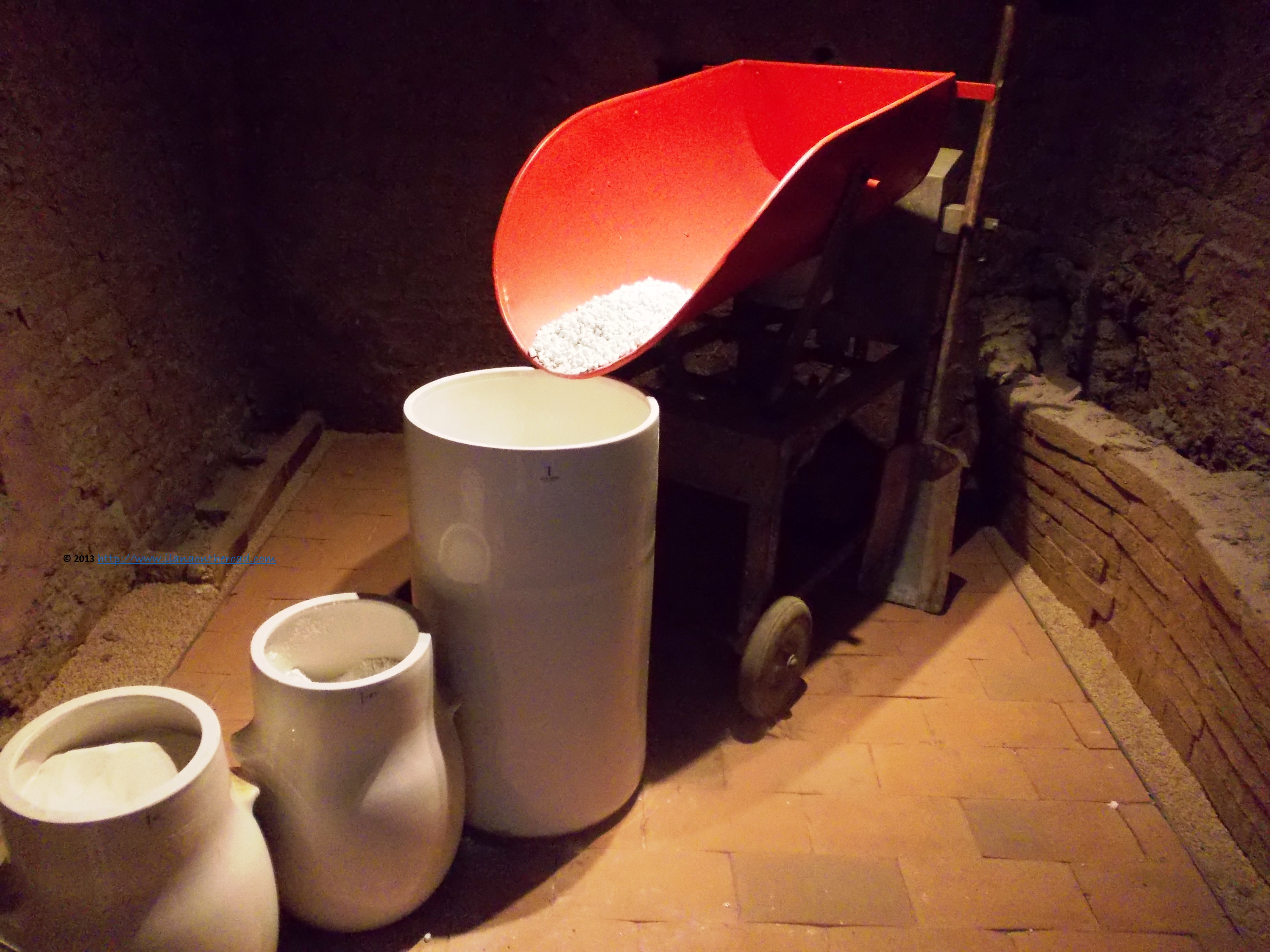
The recipe of the KPM porcelain - arcanum - remains a well kept secret, but was possibly improved in time, based on the result of information received via industrial spying - mostly in Vienna and other places where big trades were meeting - in the 19th century and later. Basically, the porcelain paste is made of kaolin (Chinese clay), feldspars and quartz. The purity of each ingredient guarantees the specific quality of each product. The main ingredients are mixed with water and drained in order to eliminate impurities. After, the composition is kept in a room with 100% humidity. The model created out of the paste is going through two stages of firing: it is first burned for 980C till the water is completely eliminated; second, it is dipped in a blue solution that burns off during the second firing. The expert eyes analyses the quality of the porcelain and stamp them with the KPM trademark only when there is 100% guarantee that no impurities are left. Usually, at the end of the stages of firing, the piece of porcelain is 60% smaller.
Image
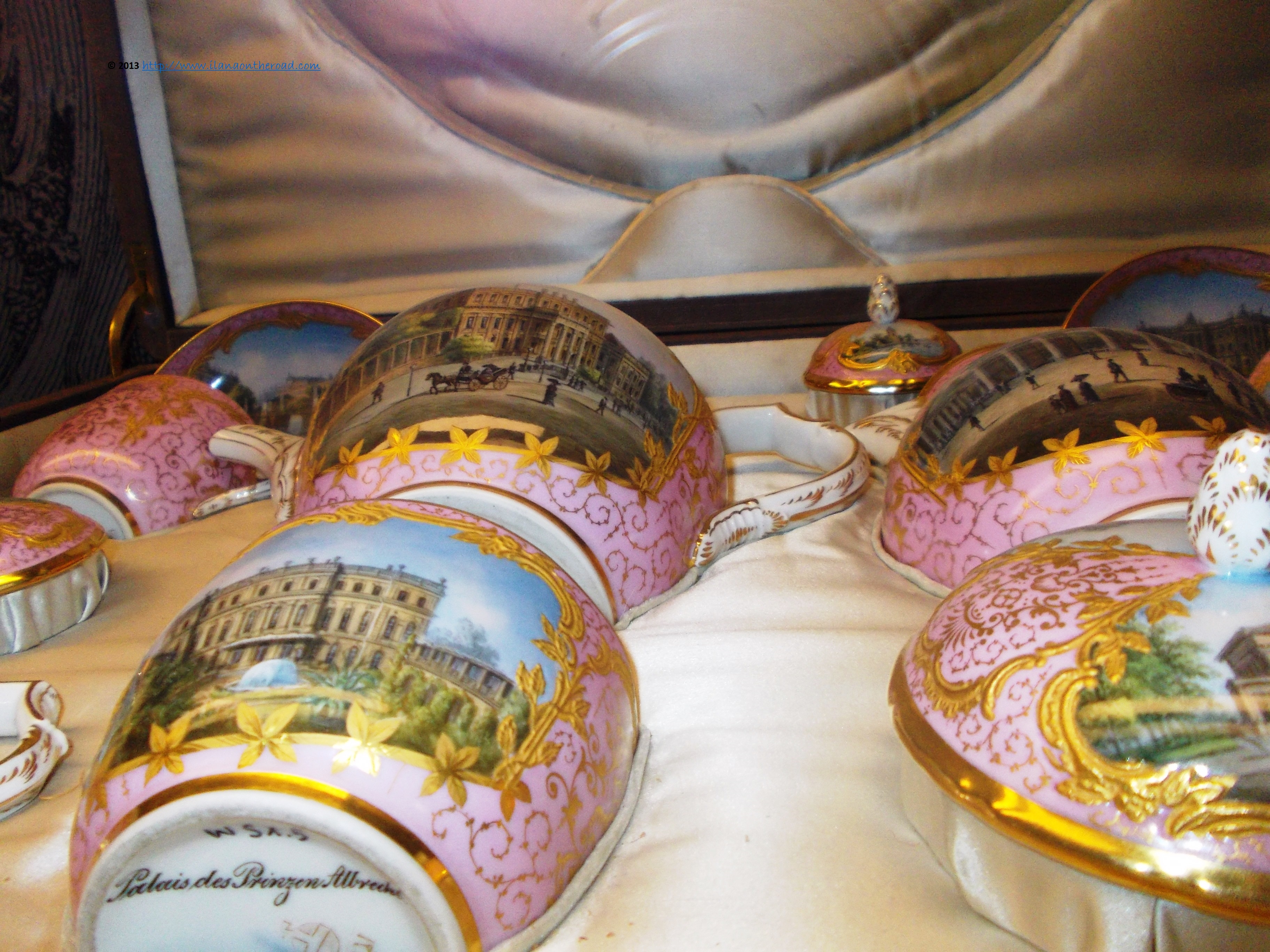
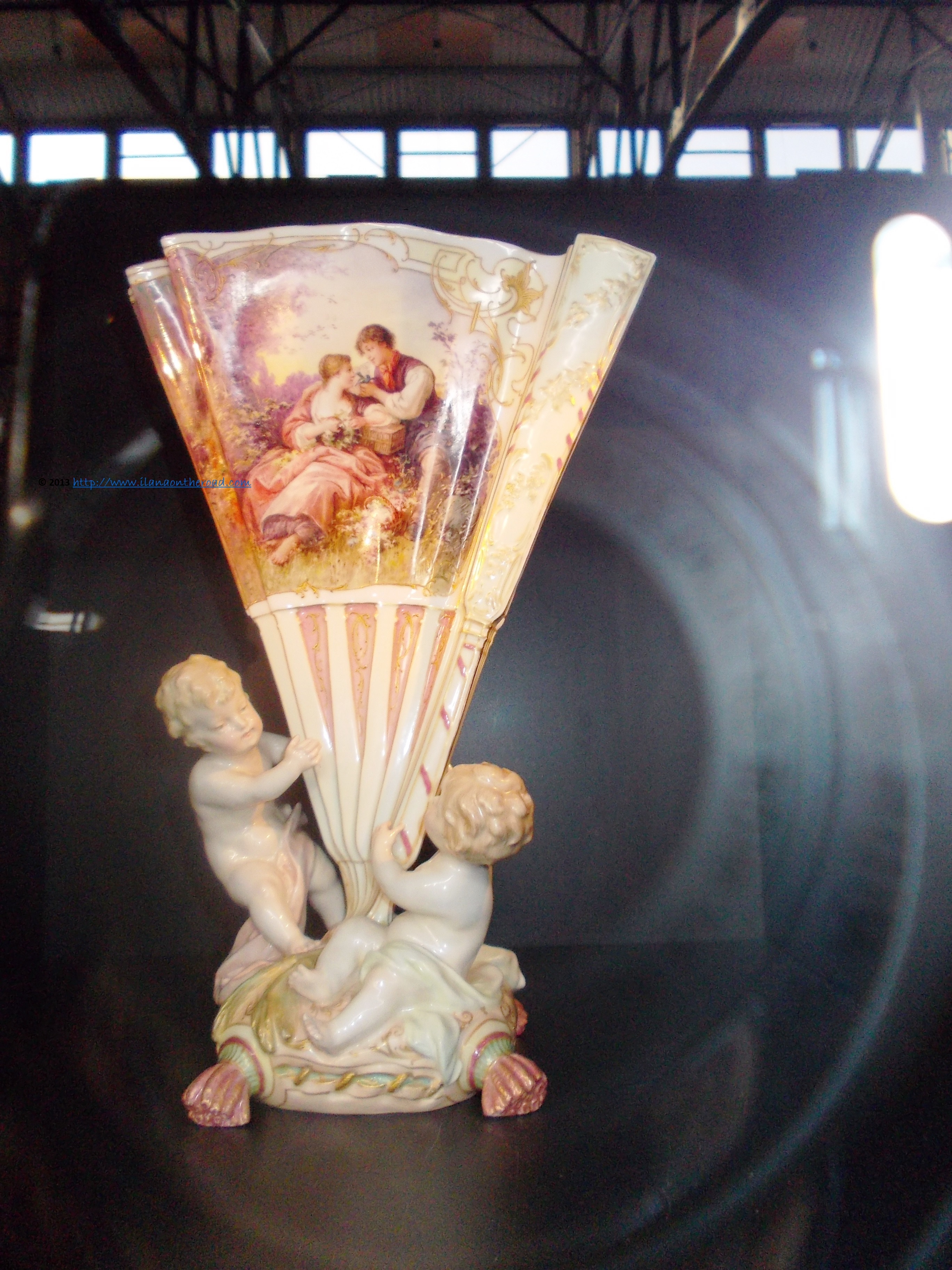
Every single item produced is unique and hand-painted by a team of skilled artists. Oil paintings, like Watteau's, and classical statues served very often as inspiration for various decoration requested by the royal owners of the manufacture. Karl-Friedrick Schinkel, my favourite Prussian architect, created special porcelain collections too, most of them inspired by his architecture projects. Items made in the old style are available at the manufacture or part of the private collections.  Image
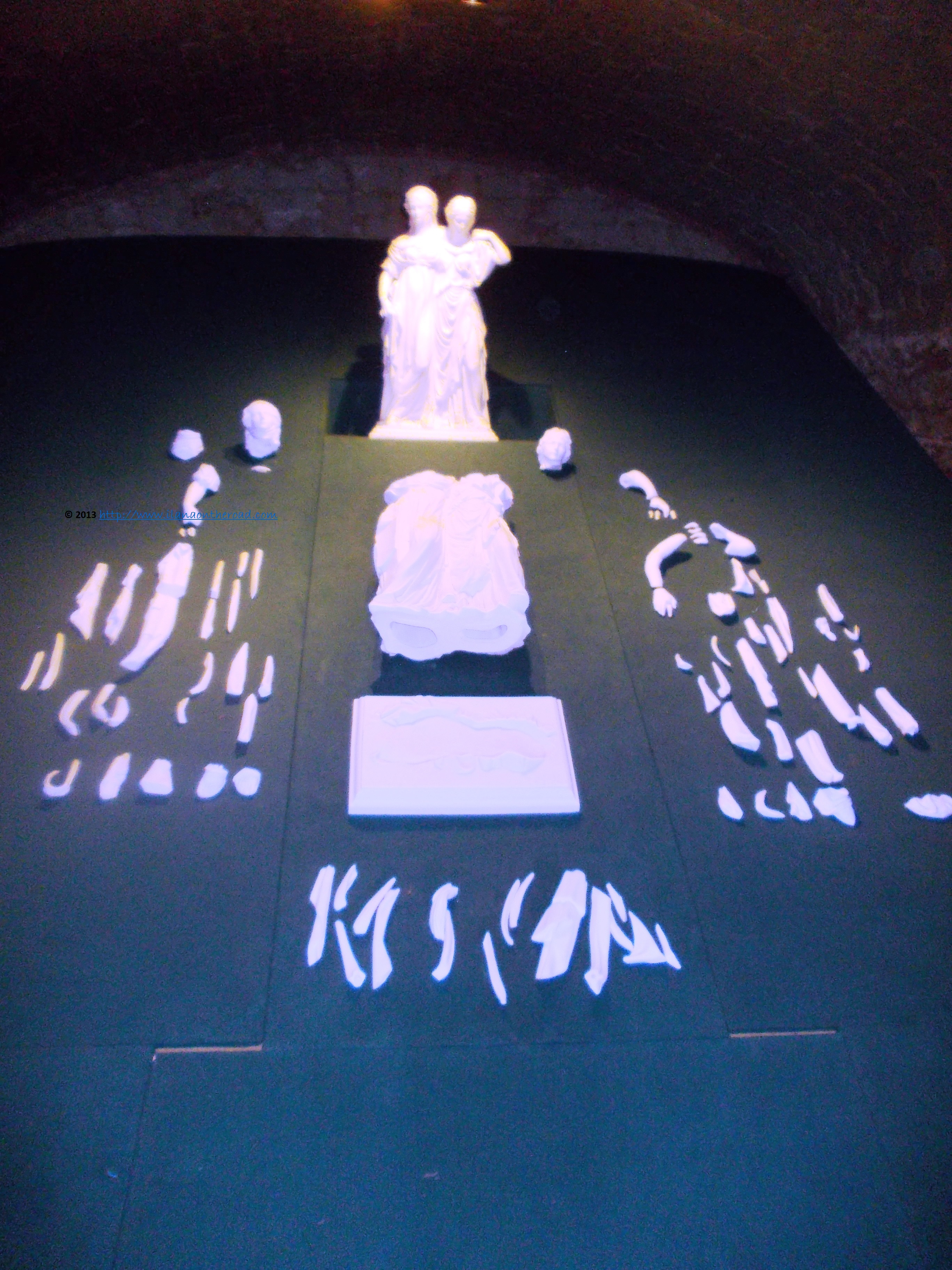
I always thought that is no difference between a porcelain statue and a statue in general. I was wrong. Each piece is produced separately and assembled later. It goes the same for a small cup of coffee, composed by a main body, lid, lid handle etc. A simple item is usually composed of 11-15 mould pieces.
Image
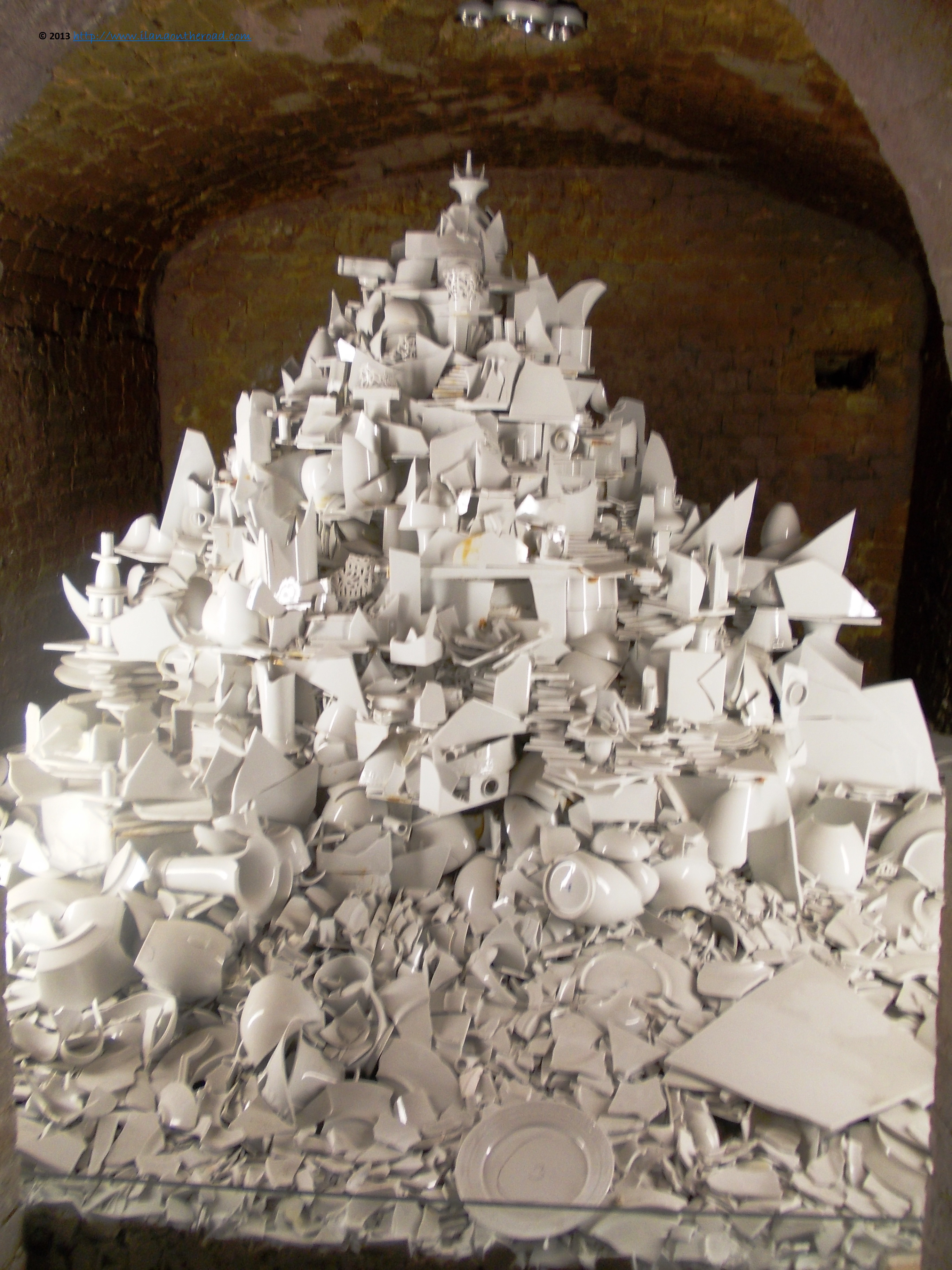
Due to the very strict selection process, many pieces of porcelain do not pass the test of purity and are joining the big mount of wreckage. Many of the pieces are re-used for various means, as for instance, for the composition of the floor.
 Image
The work in the porcelain manufacture requests time, as every stage of the production is a punctilious effort. The work to a small cup of coffee may last between 1 and 12 weeks. The porcelain paste itself needs around 6 months till being clean enough for being used. As in the case of mining, many skills are transmitted from a generation to another.
Image
Each model is unique. The painter is inspired by a classical model, but he/she adds its personal touch and combination of colours. From Napoleon to the sultan of Brunei, all wanted to have their own piece of porcelain, whose fine lines and uniqueness were and still are almost the same subject of devotion as gold and diamonds. Defying time, KPM keeps the tradition of style and mystery.
In 2013, I was offered a free German-English tour of the KPM. The opinions are, as usual, my own. 

Luxury travel: Hotel de Rome, Berlin

Image
It was Fashion Week in Berlin and I was visiting one of the main destinations of fashion designers in Berlin: Hotel de Rome. This luxury hotel, situated in the heart of the capital city, a couple of minutes away from the Museum Insel, is part of a large network, Rocco Forte Hotels, with several locations in Germany, Belgium, Czech Republic, Russia, Italy, UAE and Great Britain, among others.
Despite the busy schedule of guests, the lobby is quiet. The discrete buzz behind the curtains, at the reception and in the restaurant or the bar reminds of the former active life of the building during the time when it used to be a bank.
Image
As many other locations in Berlin, this building has its own story too. It was originally built in 1889 as the headquarters of the Dresdner Bank. It continued to be a bank during the Cold War in the then communist Germany and shortly thereafter was converted into a party space. Once turned into a hotel, it was redesigned following a project signed by Olga Polizzi. The old offices become historical suites and the serious halls were given a colourful stylish touch. 
The historical ballroom, for instance, preserves the shapes of the old balconies from where the main managers used to overview the main operations of the bank. Nowadays is adorned with luxurious candelabra whose light is completing the natural daylight provided through the glass roof. It has a capacity of up to 250 guests. The space can be used for big parties, weddings or even congresses.Image
Another favourite location of the guests, especially for the wedding photos, are the old metal stairs, whose seriousness  was sweetened with some creative yet simple lightening solutions.Image
Some of the rooms from the historical part were kept in their original format. Nowadays the safe-like doors are hiding the privacy of the customers. Most of the visitors are from the US, UK, Italy, France and Brazil. The guests are free to stay as long as they want.
 Image
The hotel has 146 bedrooms, with 37 suites. The 4 historical suites have 5-metre high ceilings and original wood-panelled walls. The ambiance is relaxed, with a wise use of the space, whose dynamics are mainly created by a colourful choice of accessories and irregular sizes of furniture. 
Image
The main inspiration of the suites is the active life of the city. The eclectic mixture of materials and styles are keeping a classical main line. Special arrangements can be made for families with children, not only in terms of offering the extra-beds, but also regarding exclusive services focused on the little guests. The hotels provides children's amenities, including slippers and robes, children's in-room dining and restaurant menu, special babysitting services, that may also provide special classes, such as cooking or various entertainment programs. 
While I am presented those details, I sigh nostalgically: wish I am a child to get all this pampering treatment here...
Image
Even for luxury hotels, the bathrooms aren't always looking too stylish or inviting. Thins are different in the case of Hotel de Rome, where the wall mosaic brings a welcomed note of elegance. In addition, all bathrooms feature heated floors, with walk-in showers and separate bath. 
Image
The modern rooms have more bold colours, but the same combination of elegance and practicalities is kept. You can easily work comfortably in your room, have a special business meeting or a conference call. For high-speed Internet one may need to pay around 20 Euro/day. 
Image
The best kept secret of Hotel de Rome is the pool, hosted in what once used to be the old jewellery vault. A perfect choice, isn't it? It is the longest hotel pool in Berlin, of 20-meter, mostly reserved for the hotel's customers. Bachelorette parties can be also booked. The spa has 6 treatment rooms, a Finnish Sauna and a gym. In the summer, the hotel's terrace can be used for yoga training. Image
The nail parlour is another example of successful integration of the long-term memories of the building. The small window was used to bring the necessary supplies of money to the bank. The original metal door frames and some of the closets were kept. The space can be also transformed for a romantic private dinner. The candle lights and the tasty food possibly create a different ambiance. 
Image
As I decided in the next weeks to test the offer of afternoon tea in the non-English city of Berlin, I love to hear that there is a special program offered in the Opera Court, for 35 Euro. The location looks inviting, cosy and even discrete, although it is an open space. I am already thinking to my next visit.Image
The restaurant Parioli has a Mediterranean menu changing weekly, offering mostly seasonal dishes. The breakfast is basically a buffet, composed by local German jams from Spreewald, pancakes and eggs Benedict. The average business lunch costs 26 Euro for 2 courses. 
Image
If interested to meet the VIPs, most probably the bar is the perfect place. The bar and lounge offer not only views over the Bebelplatz, but also a variety of drinks and cocktails. As in the entire hotel, people are working all round the clock here too. The room in-dining is available 24-hour. 
One hour later after I started my tour of the hotel, the same discrete buzz is continuing, with the same welcoming quietness in the main lobby. You don't have to be a fashion designer to want to return here, even only for another hour of afternoon tea. 
More views of Hotel de Rome, on the Pinterest board: http://www.pinterest.com/ilanaontheroad/hotel-de-rome-berlin/
Disclaimer: I was offered a complimentary tour of Hotel de Rome, but the opinions are, as usual, my own.