Showing posts with label berlin travel tips. Show all posts

Discovering the Mysteries of Body Worlds

My parents wanted for me to be a doctor and having spent time a good amount of time as a child in hospitals and various medical facilities for my own medical reasons or just keeping company to various relatives made my familiar with the world of science and medicine. Although I made my own career choice - and proud of it - I was left with a sense of respect for the medical profession and with no fear of needles and blood and anything that has to do with medical proceedings in general.


Therefore, I was really excited to finally have the chance to visit KÖRPERWELTEN exhibition, a couple of steps away from the iconic TV Tower. I've read a lot about the exhibition that started in 1995 in Japan, including about the opposition to it, as it displays the interior human bodies, a view for some might be controversial. Visiting it is a matter of personal choice, after all and no one should tell other people what to think and where to go - or not - whatever the reason. 


Besides offering a throughout view of human bodies, the exhibition offers also valuable information about physiology and health. Many sensations and emotions we experience during our lifetime may have a scientific explanation. Take, for instance, the broken hearts, explained at the exhibition: 'Their symptoms are like that of a heart attack: shortness of breath, chest pain, anxiety and fear of dying'. A physical examination will not reveal any physical findings, as in fact the shock of a breakup or the lost of a dear one triggers 'an avalanche of stress hormones that flood the body and paralyze and permanently weaken the heart muscle'.


But more than various explanations I read, the view of the body in various contexts of movements is what fascinates me. The display of muscles and arteries, the complex structures hidden under the fine layer of skin is humbling. It shows both our fragility and strength.


Another outstanding piece of the exhibition is the Fisherman: The anatomical structures of the body are opened up and shifted apart. The spaces left in between allow to see the specific organs of what is described as a seated fisherman.


The details covered by the exhibition are extraordinary, going through the smallest details of the human body structure. I've found it very important the contemporary touch of the exhibition, which warns of the harm and changes to human physiology brought by the pressure we are under in our busy world, especially the daily stress. 


The process of turning the human bodies - offered in this aim by body donors that expressed their wish during their life - is called plastination is lasts around one year. 


It is a rich and thoughful amount of information one is processing after the visit at this exhibition. You can learn here more than in any classroom and it makes you take your body more serious. Body and mind are very well connected. Ignoring the signals sent by one or the other are a dangerous self-destructive move. The dynamism of our body shows in fact that we are made for life, but it is up to us to strive to keep ourself alive and healthy.

Disclaimer: I was offered free entrance at the exhibition, but the opinions are, as usual, my own

For more travel stories, follow my YouTube channel: https://www.youtube.com/@ilanatravels

Biesdorf, Berlin's Hidden Gem of a Castle

Marzahn is not necessarily a place on the map of Berlin travels. Usually associated with high unemployment  and communist-style blocks of houses, it is one of those areas that you rather avoid during your short or long stay in Berlin. Among my expat friends, I can hardly find one single enlightened person that ever went to this part of the city, unless I dragged them with me to visit IGA 2017 Flower Exhibition.
However, there are a couple of things that are worth seeing in this part of the city too, among which the natural diversity with a multicultural touch of the Gardens of the World to which IGA Show is nowadays part thereof.
I am not someone to give up that easy a travel adventure, no matter where though, and although a visit to this part of Berlin might take over an hour from my Western side of the world, I know from my extensive travel experience in the most remote and off-the-map locations that there is always something worth seeing everywhere, even it might be only some samples of Soviet-style architecture. But there is more to Marzahn than the stereotypes we - not necessarily expats - label with. 
For instance, the pink beautiful castle of Biesdorf.


Before the intensive expansion of the city of Berlin that took place at an aggressive pace starting with the end of the 19th century, Biesdorf used to be a small village area. There are only a couple of traces of that anti-urban life left now, especially around the S-Bahn Biesdorf area, where you can still find small houses and partly cobblestone streets. Around the S-Bahn, there are also some small fast food points, just to get some supplies before a long ride through the 4-hectare park of the castle.
Directly from the train station, you only have to follow the Albert-Brodersen Allee to make your entry into a world which is completely out of time. The rows of trees bordering the long alley are your key to a different kind of urban kingdom.


Oh thou, searchers of solitude, you have a garden where you can find your peace with a book on your lap. This time, it was a disruption into the daily peace and happiness program, as a group of teenagers were looking in the garden for their peace while listening to loud Goth music rhymes. Maybe the next visitors will have more luck at this chapter.


Not bothered by the musical background, which was fading away more and more as I was moving forward on the alleys anyway, I took a big breath of fresh air and admired the natural surrounding, with the discrete traces of human creativity. The meditative pose of this massive stone statue is in complete sync with the mood you are turning on while walking and walking around the park.


Then suddenly, while overwhelmed way too much by the nature - after all, we are just visitors in the Kingdom of Nature and although we may proclaim our love of it, we are rarely able to fully understand what this beautified and mystified natural life is all about - the pink castle of Biesdorf, with its careful planned Italian architecture angles interrupted the revery. 
Biesdorf Castle is one of the 25 castles, manors and villas left to the city of Berlin after all the tragedies of the last century. Compared to other massive German castles, it rather look like a villa. It's history started at the end of the 19th centry, when it was first built for the Baron Hans Hermann von Rüxleben. Later, it was acquired by Werner von Siemens and stayed in the family until the beginning of the 20th century. In 1919, the villa was hosting various apartments. The owners changed little from the outdoor look, with most interventions being rather aimed at the gardens. 
The city of Berlin purchased the castle in 1927, and when it was re-opened to the public, in 1933, it was fast taken over by the National Socialist party.
Destroyed completely in 1945, it was rebuilt and opened during the communist Germany time in the late 1950s as a leisure center.


The ambiance around is typical for the early spring: many people - especially those accompanied of children of all ages - prefer to run around the gardens and enjoy the chill. Some are enjoying the view while sipping a coffee from the elegant large terrace. As usual, I prefer to have the best of both worlds and intensively exploring the gardens with a long stop indoors.


The octogonal tower is a landmark of this castle - besides the colour - and I am dreaming of being able to have a look over this part of the city from the top, but unfortunatelly such a chance is not being given to this demanding writer. The chance to admire every angle and corner of the building are lessons good enough in terms of architecture and for such an architecture lover as me, it is enough for now.


The indoors area brings to this journey to the unknown part of Berlin a human touch I was longing for. The free-of-charge exhibitions hosted here offer the chance to explore the works of local artists, some of them featuring visual life stories about the inhabitants of Marzahn. And it is much more to it than Cindy of Marzahn, as the photo exhibition where random people living in this area are sharing their interesting stories.


In other hall, a piano is taking a well-deserved break before a new concert will be offered to the visitors.


After changing hands so often in less than 100 years, after the reunification of Germany, Biesdorf Castle went through massive renovation works and in 2016 was finally reintroduced in the public circuit. Nowadays, it is managed by a foundation running various local projects and its exbitions are aimed to raise awareness about local problems and identity.


As usual, my successful trips are ending on a sweet-tasty note. After more than an hour journey to this part of Berlin, followed by a long historical and nature exploration of the castle itself, I reward myself with a delicious hot-chocolate and poppyseeds cake - Mohnkuchen - from the castle eatery. It might not be real castle food, but it has a local touch and a very friendly customer service so it is a happy ending of a trip that would love to repeat again in the near future. 
Against all odds, it seems that Marzahn has a lot to offer to the curious eyes and mind.

For more travel stories, follow my YouTube channel: https://www.youtube.com/@ilanatravels

Tips for Exploring Strausberg bei Berlin


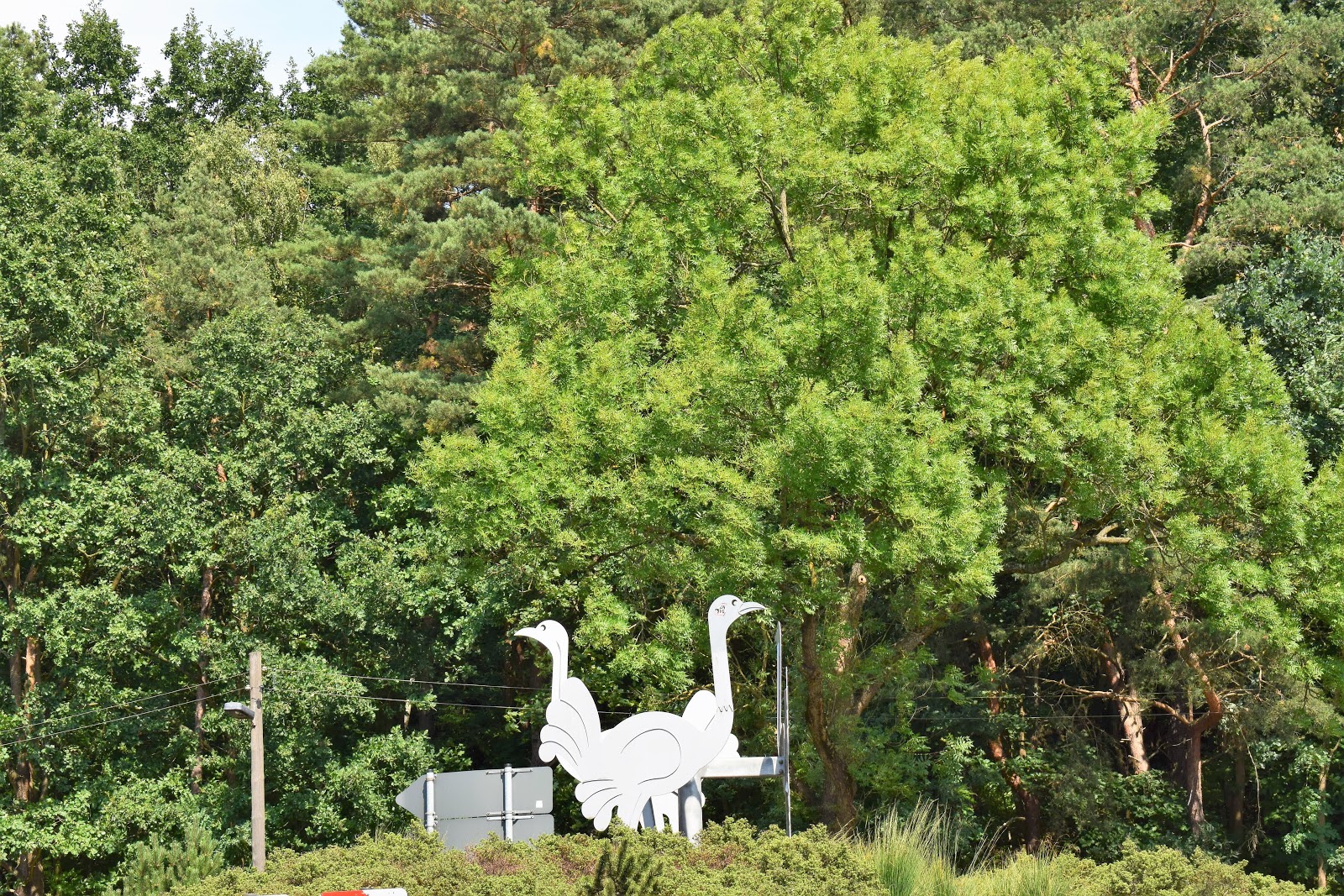
How the straus become the symbol of Strauberg, this relatively unknown part of Berlin which you rarely stop by on the way to best known places like Buckow, is not fully clear. Reacheable from Berlin Zoo station with the S5 S-Bahn line and the ABC ticket, Strausberg (b. Berlin to make the difference to the homonymous from Frankfurt/Oder) may be a pleasant and affordable destination if you are looking spending time in the middle of the nature. With part of it belonging to the picturesque Märkische Schweiz as well as to the equally picturesque Märkische Oderland, it has a lot of free time activities to keep you and your children busy for at least one full day.


The journey lasts around one hour, passing near small villages that make you forget that you are still in the big capital city. Berlin and Strausberg are connected via train lines since 1948. Since the 18th century, Strausberg used to be a so-called garnison city (like Wünsdorf, another interesting destination near Berlin I will feature in one of my next posts) and remains until today one of the biggest German Army headquarters in Germany' East. What we see upon arrival though, besides the blocks of flats GDR-style, are alleys bordered by old trees, an invitation to thoughtful walks.


The old walls are not only well preserved, but integrated harmoniously into the contemporary landscape. It gives to some part of the city the air of a fairy tale with an urban background.


In some cases, the old walls were converted into entrances to the relatively new - in centuries' time - blocks of buildings.


When I drove the first time through Strausberg on the way to Buckow, I noticed a group of visitors taking pictures in the front of a sailor statue. Apparently, this character, which reminds of the revolt of the Kiel sailors in 1918, in solidarity with the November Russian revolution is a local attraction, as people were this time also in the front of it for photo opportunities. The work belongs to Hans Kies, who also created the memorial art at Buchenwald camp, a personality - both political and artistic - among the GDR artists of the time. 


Although most of the city looks designed in the spirit of the late communist 1970s, there are still some old corners reminding of other times, especially on Bebelstraße.

A couple of meters away on th same street, there is the local museum. The name of the street is not accidental, as here, in 1898, August Bebel held a conference and the street was named in the honor of the founder of the German social-democracy.


Although I love history and to discover historical episodes during my travels, summer for me is mostly made for exploring nature and hiking. Strausberg has plenty of it to offer, starting with a small boat tour for 1.50 Euro one way, crossing Straussee.


On the other side, you can make a round hiking near the lake, with views over the city. A very creative idea was to offer once in a while some short explanations about the buildings and areas visible from the other side of the lake. For instance, the electricity factory or the Fishermen' quarter. Learning through hiking was a really interesting idea and experience.


The trail is relatively easy and all you need is a good pair of shoes and the desire to keep walking. You can also bike, walk your dog and carry your baby in a pram. There is no limits to your desire to be in a good shape. 


On the shores, people are sunbathing or picnicking, listening to music or just enjoying their own company.


Some lucky ones do have boats that brings you fast in the middle of the lake, with views on both sides and the immensity of the water surrounding.


Hiking around the lake lasted around 2 hours of slow pace, but it built up a lot of positive energy and strength, not only in my muscles.


Time for a tasty reward: an ice coffee at the welcoming Milchbar, near the city hall, a place where besides various bio and natural treats you can also have breakfast from 9.30 to 14.00. The service was friendly too and they do have some great icecream sorts worth to try at least once.


The city hall - Rathaus - building looks like a big mansion, elegant and with clean architecture lines.


We want to explore a bit more, and we arrive again in an area surrounded by old city walls intertwined with the modern one-storey houses.


The views from the Panorama viewpoint are smoothing and postcard worth.


A couple of meters away, on the lake, there is a boat competition taking place, on the occasion of the Dragon festivities, a local benchmark in the list of summer events in the city. Besides, the Volkspark is turned into a great playground.


The most surprising parts of Strausberg though are on the sideroads less travelled: Kürtzestrasse has some lovely timbered-houses built on a strong stone foundation and with colourful small doors that look simply lovely.


This part of the old city is by far my favorite and I slow my pace to admire one and every single one of the beautiful colourful houses.


In a short amount of time I am on Großstraße, the avenue where most shops are concentrated, many of them offering products, especially fashion-wise which remind of old, unfashionable times. In one small interior yard, there is the Alter Brauhof, a reminder of the glorious brewery times of Strausberg. In the Middle Ages there used to be at least 60 breweries, not few of them around the Dominican monastery. Following the 30 Years War (1618-1648) most of them were destroyed and 1880 marks historically the end of the local beer production. The building reminds as a historical memory, that can be admired from the white covered tables of the Italian restaurant nearby, apparently Strausberg's best foodie destination. 
Nearby, the Lindenplatz was quietly empty, but locals say that on Tuesdays, when the weekly market takes place, there is a completely, lively ambiance.


With its new and old part of the city, its beautiful nature and calming view of the lakes, Strausberg was a really pleasant travel surprise. Most probably, when I will be around the next time, I would prefer to stop and see more of it instead of just crossing it in a big hurry, lured by other unknown more appealing destinations.

16 Top Things to Do in Berlin for Free

'Poor, but sexy' was the description a former popular mayor gave it to Berlin. Since he left office less then 5 years ago, the prices are on the raise - especially in terms of rent and housing in general - and making your life here is not as easy as it seemed and used to be - at least for some dreamers. However, as a short or long term visitor, you can easily enjoy your life here and the secrets of a city which even 10 years later, keeps fascinating me. For those visiting Berlin on a tight budget - or keen to spend money on an additional trip outside the city - my bottom-of-the heart recommendation is Potsdam, which is close and a hidden gem of everything, from architecture to nature, history and food too -  or for some foodie experiences, here is my top list to do in the city, without breaking the bank while getting (almost) the best of my home city completely for free. All you need is a one day transportation ticket. Otherwise, you can also purchase a Berlin Card which will give you automatically free access to some important cultural highlights plus other travel advantages. 

1. Admire the architecture of Potsdamer Platz


Less than three decades ago, this place was a No Man's Land as it was situated at the high security border between the West and East of Berlin, but nowadays is displaying the most spectacular and futuristic architecture in all Berlin. In the 1920s, the writer Stefan Zweig called it 'the Babel of the World' and it is what it may still look like, after the intensive works of decorating the place with gems of architecture signed by great minds in this domain as Hans Scharoun, Helmut Jahn or Renzo Piano.  From the spaceship shape of the Sony Center to the Marlene Dietrich square where the famous Berlinale Film Festival which is about to begin soon takes place every year, keep your head up and don't forget to breathe. Fully recommended to visit especially during the winter season, when the sky scrapers are getting a touch of humanity with all the festive lights and air balloons snow men. A full article dedicated to one of my favorite places in the city, coming up on the blog this month too.

2. Top sightseeing: Brandenburg Gate and Unter den Linden Alley

Picture took from the famous Adlon Hotel nearby

Minutes of walking from Potsdamer Platz, this part of Berlin is always busy with tourists from all over the world, taking a selfie or just curious to find out more about the history and architecture of this place. From Pariser Platz you can walk a couple of minutes until the Memorial to the Murdered Jews of Europe. From Brandenburg Gate onwards, you can walk alongside Unter den Linden boulevard until Bebel Platz - another famous place in the infamous WWII history of Germany - Humboldt University and its weekend old books small flea market and the newly renovated Opera House. If you are hungry for some cultural treats, you can visit - for free - the Humboldt Box with precious information about the past, present and future of the city. Recommended time to visit is during the summer when the lime smell is inebriated - Linden stands for lime in English, and actually many cities in Germany do have their own Unter den Linden alley as well. 

3. Visit the German Bundestag


The German Bundestag roof terrace and dome can be visited for free, but prior registration is requested. Part of the governmental quarters with its bold architecture, this parliamentary institution is democratically opening its doors to travellers from all over the world that from the top of the dome can even have a look at the regular MPs working sessions during the week. 

4. Admire the classical architecture of Gendarmenmarkt


A couple of streets away from Brandenburg Gate, Gendarmenmarkt is a highlight of classical elegance in the Mitte part of the city. Besides the beautiful buildings to admire, here are regularly organised open air concerts and various other events during the summer. My favorite time to visit is during the Festival of Lights, organised at the end of each autumn, when the buildings are displaying a variety of colours and light shapes. From there, the Checkpoint Charlie which separated the East from the West can be reached within minutes. 

5. Walking around Tiergarten


Once a hunting ground, hence its name - Tier means animal in German - Tiergarten is a place to visit regardless the season, including during the rare sunny days during the winter time. Walking through its alleys is a pleasure and a lesson, with its special lamps representing different parts of Germany, or the open beer gardens in the summer or just the many green spots near the rivers where you can just rest and read under the blue sky. 

6. Learning about Berlin history at Nikolaiviertel


On the way to Alexanderplatz and its famous TV Tower - not a freeby destination, though - Nikolaiviertel - Nicholas' Quarter - represents the oldest part of Berlin. Created in 1200, this little sequence of the very old times in the city, has a special charm, with the cobblestone streets, small coffee places and car-free areas. Forget the ugly communist looking buildings - the famous Plattenbauten - you can roam around the place as is no tomorrow. My favorite time to visit is in the summer, when you can spend all your time outdoors, people watching while sipping your coffee and having a little bit of delicious local food. 

7. Street art at the East Side Gallery

Berlin is worldwide famous for its street art - an extensive post with my favorite places to see it, coming up to your favorite blog in a couple of days too - and one of the famous places where you can see it is the East Side Gallery, the longest part of the Wall still intact.


After the Wall was finally down, artists from all over the world used its concrete canvas for creating unique pieces of art which are nowadays classical works of street art. It is the world's largest open air gallery, covering 1,316 meters.


My favorite part of it is however at the very end of it, after 15 minutes of walking or so - close to Ostbahnhof train statio -, where you can find very mind-blowing samples of work that can be easily considered for any serious art exhibition.

8. Outdoors in Grunewald and Schlachtensee


Despite the mass of concrete and the scaffolding surrounding most of the central and eastern areas, Berlin remains a green city, surrounded on all parts by forests and beautiful lakes. Grunewald is one of my favorite places to visit during the summer, especially when I am starving for some hiking, with great relaxing views. Schlachtensee is a great destination for both children and adults and a perfect way to spend an active weekend. 

9. More outdoors in Krumme Lanke and Nikolassee


After Schlachtensee, you can continue the green exploration of the city with another two places you can visit for free: Nikolassee and Krumme Lanke. Children will enjoy chilling around, especially if you are prepared for some swimming sessions around the lake. During the summer weekend, the place is fully packed, but during the week it is rather the opposite and walking around thinking about life and gratitude can be done without being bothered too much. If you travel with your pet, you have one more reason to consider those places, as in Krumme Lanke, there is even a small patch of beach where the 4-leg friends can jump in the waters and make new friends too.

10. Countrylife at Domäne Dahlem


If you plan to take your little children with you to Berlin, there are so many things that you can do together with them, one of them being a visit to the Domäne Dahlem. Except the second half of December when the holidays fair is taking place every weekend, the entrance is usually free and it is a great way to question the limits of farming lifestyle implanted in the city, while getting to know different plants and cereals and meeting face to face animals that many kids often see only on TV or in the books. Seriously, how many of you, city kids, went face to face with a cow or a hen in the last five years?

11. Summer fun at Tegel Lake


Tegel Lake - Tegelersee - is a top place for bathing, enjoying the summer sun and also doing a little bit of very easy hiking. The second largest lake and is practically an island of green in the middle of the city, close to the industrial area of Siemensstadt and a couple of boat stops away from the picturesque town of Werder - an der Havel. 

12. History classes at Karlshorst Museum


If you love history or you are a historian yourself - as me - Berlin is a place to consider not only for a visit or two, but even for a long stay. Especially the museums dealing with WWII have free entrance, therefore you can come over and over again for better understanding the recent history. You can start with the Karlshorst Museum, where the surrender of Nazi Germany was signed in the night from 8 to 9 May 1945. A little walk around the area is also a recommended (free) experience. 

13. Cold War Histories at Alliirtenmuseum


Continue your history lesson with the Cold War experiences viewed from the Western side of the city, with a visit to the Alliirtenmuseum - Museum of the Allies - in Zehlendorf/Dahlem, in what used once to be under the American control. With information available in French and English, beside German, this is a very well done permanent exhibition, explaining painful histories of the city, such as the Berlin Blockade during which the Soviets blocked the access to the areas controlled by the Western powers for a year between 1948-1949 with direct consequences for the population of Berlin, in very suggestive and exhaustive ways.

14. Aviation experiences at Gatow Military Museum


For more specific details about the Cold War, with a particular focus on the military and defense developments, the Military Museum of Gatow, situated in a former airport precincts is a great historical introduction. If you love airplanes and technical histories it is worth to pay a visit to this place which is relatively far away from the city areas - but with a free of charge entrance though. 

15. Sunbathing for free at Tempelhof Field


There is another aspect about Berlin which I love: the power of re-inventing spaces. The former airport of Tempelhof, whose fate was decided by its citizens a couple of years ago, against the real estate developers who wanted this place turned into a fancy construction site, is nowadays an open air park, where you can enjoy the beautiful sky in the summer. A pleasant opportunity, especially if you don't have (yet) your loft with glass ceiling. Kite surfing, biking and rollerblade running are also (free) options to consider during your visit here.

16. Walking through Naturpark Schöneberg


Less famous than Tempelhof, but more quiet and interesting is the Naturpark Schöneberg, a former train depot turned into a natural park, with tufts of grass springing from the former train rails and trees covering completely the industrial area. There are also open air exhibition of works of art using not only the space, but also former fragments of the original place for creating unique samples of creative works.