Showing posts with label visit berlin. Show all posts

Berlin Hidden Wellness Gems: Sultan Hamam

Today I will introduce you to a hidden gem of Berlin wellness: Sultan Hamam

As Berlin has the biggest Turkish community outside Turkey, one may expect a lot of interesting hamam offers in the most unexpected places. However, it seems that some of the best are well hidden waiting to be discovered or are just a regular destination for few familiar with it. 


Sultan Hamam was opened in 1999 and is situated in a building hosting various companies and offices on Bülowstraße, close to the U7 Yorkstrasse or the U2 Bülowstrasse metro stations. Once you enter the compound you may not feel so tempted to go further on, but as usual in Berlin, you should dare, take the old style, industrial-looking elevator and follow the signs leading to the Hamam


The hamam is adapted to the various facilities of the steam bath, sauna and other wellness services offered. Upon arrival, the visitor is invited to rest and take his or her time, while sipping a glass of mint ta. The decorations and design are minimal, simple, convening the an ´oriental´ ambiance, with tiles inspired by the Turkish folklore on the walls. The space combines the relaxation features with the cleanliness/bathing and various modern wellness services, such as sauna, various types of massage, and the hammam itself. 


Although the steam bath and bath are the main purposes, additional services, some of them included in the price of the ticket are offered too: a little hairdressing parlour, peeling, massage, various cosmetic services. There are different promotional packages offered, and the services are generally affordable. You can purchase a voucher as a present to a loved one, as well. As usual in Germany, you need to make a reservation in advance, preferably at least 2-3 weeks before your scheduled visit. This reservation service also allows a good daily planning - like everything in Germany -, so you can enjoy a relaxing ambiance, without waiting too much for an available place.

Upon arrival, you receive a bracelet - exactly like in an all inclusive resort - that can be used to leave your clothes in the locker, but also adds on various services ordered during the stay. At the end of your stay - maximum 4 hours - the additional services will be paid. For instance, if you need flip-flops, or towels or a soap for a shower after you are done.

You can use both cards and cash.


The weekly daily program is gender separated. Wednesday is the couple day, and there are Women´s days and Men´s days therefore, before you are making the reservation, you should be specific about what you are expecting. The massage personnel is assigned based on gender, is very friendly and empathic, regularly checking on you if you are really happy with the experience. The main languages used are English, German and Turkish. If you have a specific language preference, you better mention in advance, but based on my observation, the personnel is very friendly and accommodating. 


The visitor is given upon arrival a brass shell ornated with Oriental motives. With the shell, one will pour the water on the body. It is a slowly ancient ritual, that require time and patience, and might bring a lot of relaxation. Think about the time running as water and the patience you need to fill the little shell again and again, enjoying the soothing sound of water poured on your body.


The Finnish (dry) sauna could be a good additional service especially during the cold days of the long winter in Berlin. From autumn till late spring, the hamam is very busy, trying to bring a ray of light - although artificial light - into the dark days without end. 

My favorite is the steam sauna, because it allows a fast body detox. As it neighbouring the hamam area, you can easily go in and out. Especially if you are a beginner in all things sauna, your body may need to get used with the steam. You better start with few minutes and extend until maximum 30 minutes with breaks in between, but you may need a lot of training. 

I personally enjoyed spending some relaxing hours at the Sultan and I will definitely come back. With winter looming, there is a chance to enjoy some warm and relaxation that will top up the energy and mood.

For more travel stories, follow my YouTube channel: https://www.youtube.com/@ilanatravels


A Guided Tour of Berlin State Opera

I've spent a lot of time as a kid attending opera performances, but my preferences in this musical area are very limited and I highly appreciate very modern - revolutionary I dare to say - interpretations. Since moving to Germany I haven't been to too many performances, unfortunately, but my latest visit to the world capital of opera, Bayreuth, is about to change this situation. As usually in my case, in order to be convinced of something I need a wise combination of culture, history and architecture. It's the only way it keeps me interested. 
After visiting the impressive Margravial Opera House in Bayreuth, I wanted to continue with more similar encounters. Next on my list was the recently renovated Berlin State Opera on Unter den Linden/Bebelplatz.


The best way for me to get a better feeling of a place is through a guided tour, therefore I embarked on a 90-minute behind the scene tour in German - tours in English are also available, you can find more about it here. The guide seems to be an opera lover too, therefore recommendations about the upcoming performances were more than welcomed. For one hour and a half, the ancient temple looking like building whose renovation costed 20% of Berlin's budget was a welcoming home of cultural findings that got me even closer to my culturally-filled childhood.


I am ready for 250 years of German music history. Inaugurated in the first half of the 18 century, and renovated several times Berlin Staatsoper is a historical institution as well. Destroyed by fire and the WWII bombs, it come back to life successful every time, attracting high profile music names across centuries, such as Leo Blech, Richard Strauss, Giacomo Meyerbeer or Herbert von Karajan.


Staatsoper's first architect was Georg Wenzeslaus von Knobelsdorff who also designed the Sanssouci  in Potsdam and the enlargement of Charlottenburg Palace. He's mission was to put into practice Frederick the Great's plan of transforming Berlin and he partially succeeded: at the time of its inauguration, Staatsoper was the largest in Europe and Germany's first free-standing opera. 
All the architects that remodelled the Opera tried to leave their own traces too, but the details of von Knobelsdorff's work are still present.


A short walk across the foyer reveals a good mixture between classical simplicity outlined by glamorous lights. A serious ambiance, indeed, which prepares the visitor for the solemn performance.


The cafe - closed at the time of the visit - is another elegant stop during our guided tour. Unfortunately, there is no way to check the delicious pastry that apparently is available here during the regular performances' program.


One of the latest architects that influenced the visual development of the opera was Richard Paulick. He previously worked with Gropius and overseen the massive post-war  renovations starting with 1951, during which the representations were mostly relocated to Admiralpalast. Paulick, who was involved in the building of Stalinallee in Friedrichschain - currently Karl Marx Allee, was not so impressed by the flamboyant rococo fancied by its predecessors which tried to tempered with his preference for classical lines.


His efforts are visible in the festive space of Apollosaal. The only outstanding piece here is the candelabra which spread its glows over the otherwise austere interior.


The golden details still remind of Sanssouci though.


And the extensive potato representations on the floor remind of what?


Until I am considering the various options, our group moved to the opera hall. Part of the extensive 2009-2017 renovations, the roof was raised and the acoustics was significantly improved.


There technical teams are preparing the evening performance but there are no actual rehearsals therefore no way to check the sound quality right now.


The opera hall as such does not look impressive at all, but it has a kind of simple grandor that promises qualiy.


During the DDR times, the former Royal Opera House (Hofoper) become the State Opera of East Germany. The golden plaquette representing a proletarian revolutionary scene is there as a reminder of those times.


As our guided tour advances, we feel the business of the preparations for the performances. Everything is set many hours in advance, including the costumes.


One of the many advantages of taking such a guided tour is of being reminded of the tremendous work behind every single show, and it includes not only the artists, but especially the members of the technical teams, in charge with setting the decor or doing those simple things as the make-up, for instance.


The super sound-proofed rehearsal rooms are waiting to be filled soon with the sound of the classical music.


The 90-minute journey behind the scene was extremely informative, but also an encouragement to see a couple of performances this season. For the English-speakers, there are some good news: many representations do offer English-German translations.

Disclaimer: I was offered the opportunity of a free guided tour, but the opinions are, as usual, my own.

If you want to see what you can do on your way to and from the State Opera, have a look at this video on my channel.  For more travel stories, feel free to subscribe to my YouTube channel: https://www.youtube.com/@ilanatravels


Biesdorf, Berlin's Hidden Gem of a Castle

Marzahn is not necessarily a place on the map of Berlin travels. Usually associated with high unemployment  and communist-style blocks of houses, it is one of those areas that you rather avoid during your short or long stay in Berlin. Among my expat friends, I can hardly find one single enlightened person that ever went to this part of the city, unless I dragged them with me to visit IGA 2017 Flower Exhibition.
However, there are a couple of things that are worth seeing in this part of the city too, among which the natural diversity with a multicultural touch of the Gardens of the World to which IGA Show is nowadays part thereof.
I am not someone to give up that easy a travel adventure, no matter where though, and although a visit to this part of Berlin might take over an hour from my Western side of the world, I know from my extensive travel experience in the most remote and off-the-map locations that there is always something worth seeing everywhere, even it might be only some samples of Soviet-style architecture. But there is more to Marzahn than the stereotypes we - not necessarily expats - label with. 
For instance, the pink beautiful castle of Biesdorf.


Before the intensive expansion of the city of Berlin that took place at an aggressive pace starting with the end of the 19th century, Biesdorf used to be a small village area. There are only a couple of traces of that anti-urban life left now, especially around the S-Bahn Biesdorf area, where you can still find small houses and partly cobblestone streets. Around the S-Bahn, there are also some small fast food points, just to get some supplies before a long ride through the 4-hectare park of the castle.
Directly from the train station, you only have to follow the Albert-Brodersen Allee to make your entry into a world which is completely out of time. The rows of trees bordering the long alley are your key to a different kind of urban kingdom.


Oh thou, searchers of solitude, you have a garden where you can find your peace with a book on your lap. This time, it was a disruption into the daily peace and happiness program, as a group of teenagers were looking in the garden for their peace while listening to loud Goth music rhymes. Maybe the next visitors will have more luck at this chapter.


Not bothered by the musical background, which was fading away more and more as I was moving forward on the alleys anyway, I took a big breath of fresh air and admired the natural surrounding, with the discrete traces of human creativity. The meditative pose of this massive stone statue is in complete sync with the mood you are turning on while walking and walking around the park.


Then suddenly, while overwhelmed way too much by the nature - after all, we are just visitors in the Kingdom of Nature and although we may proclaim our love of it, we are rarely able to fully understand what this beautified and mystified natural life is all about - the pink castle of Biesdorf, with its careful planned Italian architecture angles interrupted the revery. 
Biesdorf Castle is one of the 25 castles, manors and villas left to the city of Berlin after all the tragedies of the last century. Compared to other massive German castles, it rather look like a villa. It's history started at the end of the 19th centry, when it was first built for the Baron Hans Hermann von Rüxleben. Later, it was acquired by Werner von Siemens and stayed in the family until the beginning of the 20th century. In 1919, the villa was hosting various apartments. The owners changed little from the outdoor look, with most interventions being rather aimed at the gardens. 
The city of Berlin purchased the castle in 1927, and when it was re-opened to the public, in 1933, it was fast taken over by the National Socialist party.
Destroyed completely in 1945, it was rebuilt and opened during the communist Germany time in the late 1950s as a leisure center.


The ambiance around is typical for the early spring: many people - especially those accompanied of children of all ages - prefer to run around the gardens and enjoy the chill. Some are enjoying the view while sipping a coffee from the elegant large terrace. As usual, I prefer to have the best of both worlds and intensively exploring the gardens with a long stop indoors.


The octogonal tower is a landmark of this castle - besides the colour - and I am dreaming of being able to have a look over this part of the city from the top, but unfortunatelly such a chance is not being given to this demanding writer. The chance to admire every angle and corner of the building are lessons good enough in terms of architecture and for such an architecture lover as me, it is enough for now.


The indoors area brings to this journey to the unknown part of Berlin a human touch I was longing for. The free-of-charge exhibitions hosted here offer the chance to explore the works of local artists, some of them featuring visual life stories about the inhabitants of Marzahn. And it is much more to it than Cindy of Marzahn, as the photo exhibition where random people living in this area are sharing their interesting stories.


In other hall, a piano is taking a well-deserved break before a new concert will be offered to the visitors.


After changing hands so often in less than 100 years, after the reunification of Germany, Biesdorf Castle went through massive renovation works and in 2016 was finally reintroduced in the public circuit. Nowadays, it is managed by a foundation running various local projects and its exbitions are aimed to raise awareness about local problems and identity.


As usual, my successful trips are ending on a sweet-tasty note. After more than an hour journey to this part of Berlin, followed by a long historical and nature exploration of the castle itself, I reward myself with a delicious hot-chocolate and poppyseeds cake - Mohnkuchen - from the castle eatery. It might not be real castle food, but it has a local touch and a very friendly customer service so it is a happy ending of a trip that would love to repeat again in the near future. 
Against all odds, it seems that Marzahn has a lot to offer to the curious eyes and mind.

For more travel stories, follow my YouTube channel: https://www.youtube.com/@ilanatravels

A Walk Through Hansaviertel

Hansaviertel is considered Berlin's smallest district, caught between the River Spree and the Tiergarten. Dramatically damaged after the WWII bombings, it was slowly redesigned and reshaped at the end of the 1950s, beginning of the 60s, thanks to the active involvement of architects belonging to the Bauhaus movement, such as Alvar Aalto, Egor Ereimann, Walter Gropius or Oscar Niemeyer.
The name - Hansaviertel - was as its main streets are named after the big independent trade cities in Northern Europe, a network created from the beginning of the 12th century, such as Hamburg, Anklam, Greifswald or Lüneburg.


I started my walk from the U9 Hansaviertel train station, that was open only in 1961 - when the reconstruction of the area was almost finished. From outside, it is shaped as a rectangular long box, looking like painted in a haste during some creative hobby art workshop. 


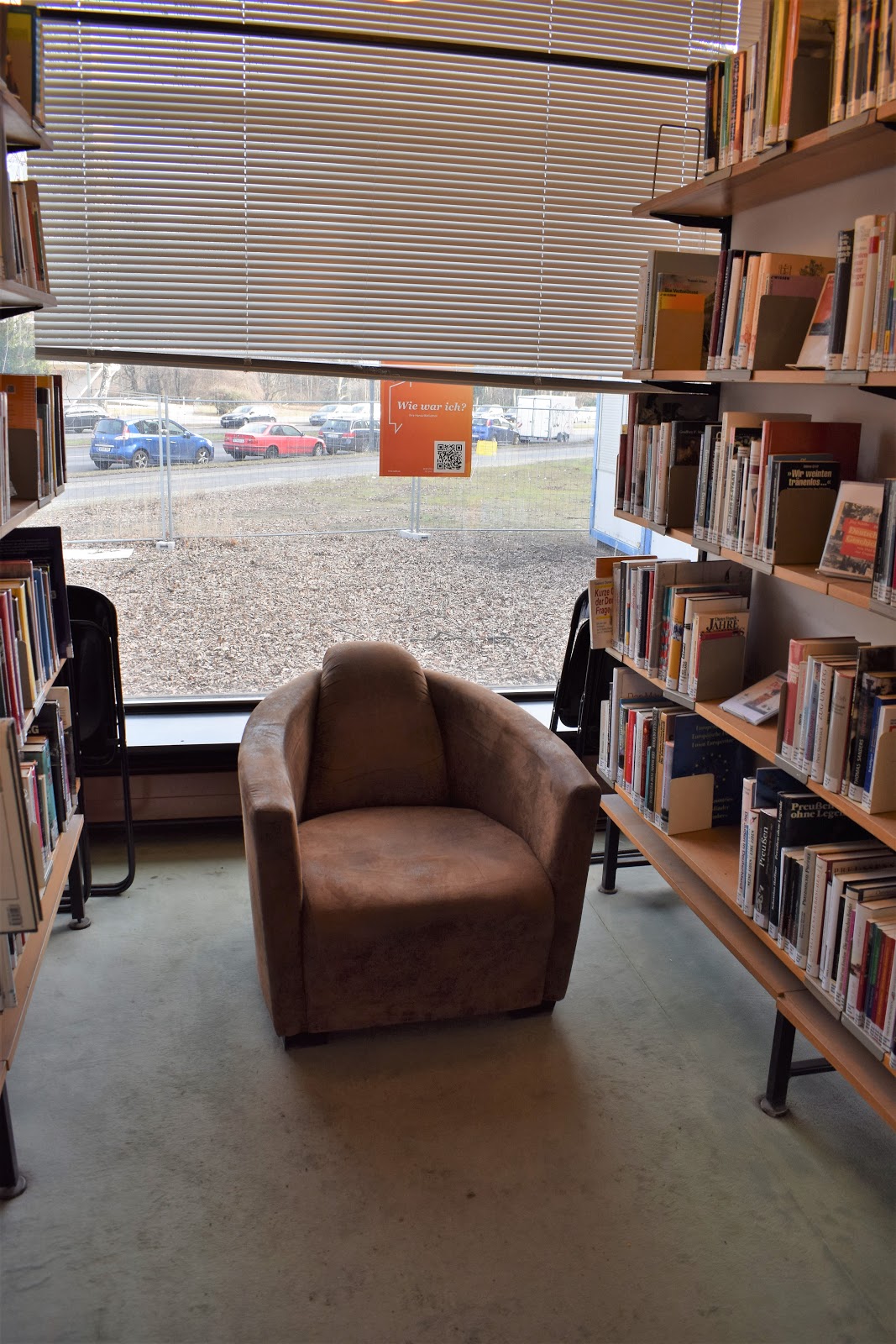
Opposite, there is the Hansabibliothek, one of the first open access libraries in Berlin. It is also rectangularly shaped, and has an interior garden - closed as for now for reconstruction works - where during the summer the visitors can read outside. 


On the other side of the road, on Altonaerstr., GRIPS Theater displays another playful visual outlook. The choice of the graphic representation is not random, as it is a theatre mostly focused on a young and adolescent audience. Most of the plays are exploring the ways in which the public shall be directly involved in the creation of art. Sounds like a place I should come back soon for understanding better this aesthetic perspective.


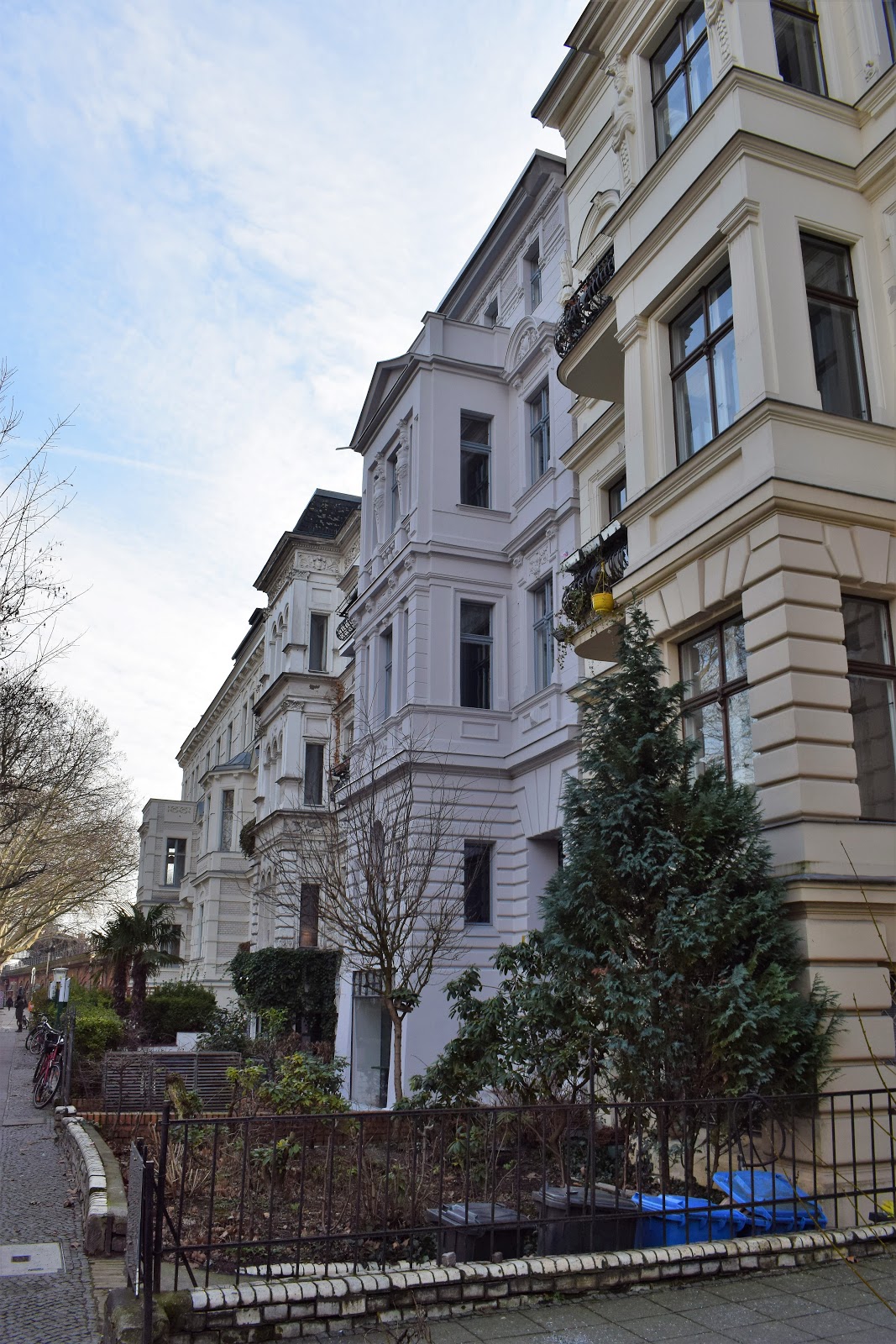
For the next minutes am mostly surrounded by anonymous over 10-storey high blocks of apartments, until I arriving on Flensburgerstr., with its freshly painted classical building, hosting at their ground level small art galleries or children-friendly caffés.


But wandering through this small island of classical old flair doesn't last longer, as I am again kept company by Tetris-like structures, made of relatively affordable materials, aimed at hosting as many families as possible in comfortable yet space-limited apartments.


The splashes of colours create a little diversity in a mass of grey buildings. After the war, West Germany needed to offer affordable accommodation to its middle class, and such real estate projects were the solution. Similarly, in the extreme West side of the city, Gropiusstadt was a offering a much larger alternative, aimed especially at the working class and low-income families.


Happily, there are also couple of human-scale - 2-storey small constructions, that remind me of some part of Siemensstadt that I recently explored.


The brutalist - read ugly - style of the Akademie der Künste might be discouraging a visit, but the concerts and literary events held there - especially on the occasion of the Literature Festival - are high class. I've been here a couple of years ago at a concert by the very talented Sanda Weigl and was impressed by the high technical quality of the sound.


Works of art are spread around the building, adding a creative note to the sober, unfriendly outlook.


When feeling overwhelmed by so many constructions and grey colours, a walk to the small park nearby saves the day, especially when you are too lazy to walk as far as Tiergarten.


Walking the empty alleys give a peaceful, almost poetic feeling.


After a short but welcomed meditative break, I am back in the concrete jungle, trying - unsuccessfully to understand the meaning - technical mostly - of the right side concrete giant tetraeder. Cannot be an elevator or an emergency exit and if it was supposed to be an aesthetical adornment, it went completely wrong. Made a not to self to try to go inside the building one day.


The enormous green spaces surrounding the buildings are well planned, therefore when the concrete is too mentally overwhelming, you have the blue sky to spend your summer days. I can only imagine how everything looks beautified when the trees are getting back their green leaves.


With its welcoming monotony, Hansaviertel taught me some interesting lessons about urban living and Bauhaus architecture and although without the mesmerizing effect the view of beauty instantly produces, it shares the feeling of a silent wisdom and sometimes it might be just enough. 
As I am exploring more and more aspects of the Bauhaus movement, I can't wait to see what intellectual discoveries the next discovery will bring to me.

For more travel stories, follow my YouTube channel: https://www.youtube.com/@ilanatravels

The Bauhaus Dutch Architecture from the English Quarter

After I've discovered this week Onkel Toms Hütte in Zehlendorf, the urban project of Bruno Taut, I was curious to see, photograph and understand another project of him, in the other side of the city: Schillerpark in Wedding. 
Included since 2008 in the UNESCO World Heritage, it was considered one of the biggest city project of the Weimar Republic, aimed to offer proper accommodation to workers, functionaries and middle-class civil servants.


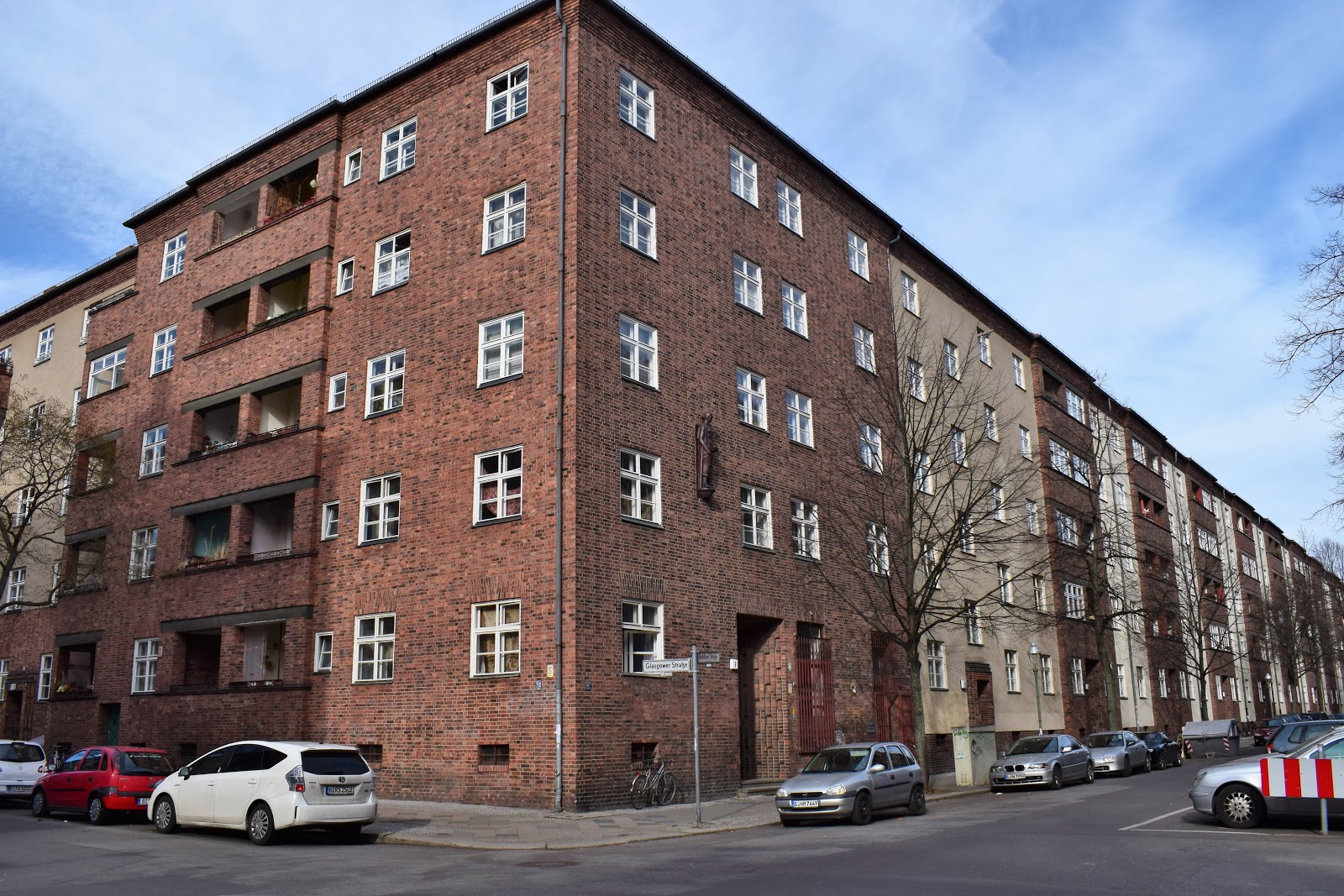
I started the journey at U6 Rehberge train station. Followed Müllerstraße and the blue direction shields leading to the Schillerstraße Siedlung (housing development project). The streets around are bearing English-sounding names, although not all of them necessarily belonging politically to the UK: Dubliner-, Glasgower-, Liverpool-, Oxford-, Bristolstraße. Hence the area was also called: English Quarter.  

However, the style rather reminds of the Dutch architecture, with an exclusive focus on red bricks. Some entrances, that I've also seen in some areas in Moabit, look like tunnel entrances, in a 3D creative display of small bricks that give depth to the entrance.
Although the style is predominantly Bauhaus, decorative elements pertaining to the Jugendstil are frequent, which confers to some buildings a specific personality and unique style. The red bricks are used not only for the blocks of apartments, but also for other buildings included in the area, including the local 1-story church. 


The materials are cheap, plaster and bricks, displayed on the 2-4 storeys buildings. According to the plans, each apartments was assigned 40 sqm., apparently enough for the needs of the bottom middle class. The area was also called 'red' for a reason other than the colour of the buildings: here there were living many opposants to the Nazi regime, most of them communists.


After the war, the project was further extended, and the different style - predominantly plaster as the construction materials at the end of 1950s, when the works were done, were relatively hard to find - is distinguishable. 


The architecture is mostly monotonous, the kind of outlook specific to high concentration of people, but it breathes a certain sence of quietness and comfort. I rarely see children on the street or bikes, and the place seems like almost lost in time.


Given the UNESCO World Heritage status, Schillerpark Siedlung theoretically has a dedicated information point. Hosted in a curvaceous shaped public convenience - simply put, public restroom - one of the few designed in 1915 by the architect Heinrich Schweizer still preserved, it is out of service as for the time of my visit. Disappointing, especially given the 100 Years Bauhaus celebrated this year.


On the other end of the park, the cubic geometry is amplified by the diversion between red bricks and the outdoors axis of the balconies. The buildings define a square, with a big green space in their middle. No shops or commercial points, as you need to go to the main street for some purchases. 


In the middle of all the orderly buildings, there is Schillerpark - or Chillpark, as it is nicknamed. A small forest, with hills and heaps, from where you can fill your lungs with fresh healthy air. If not the airplanes landing to Tegel every couple of minutes, I would have mention the majestic quietness too, but there is in fact any. There are no playgrounds, but children can easily and freely create their own games in the green areas. 
Meanwhile, there is enough space to do your morning jogging, walk your dog or when the weather allows to spend some quality time outdoors in the company of a good book.


Although my visit in the Englisch Quarter was relatively short, and besides the park and the red-bricked houses there were not too many attractions to discover, I am happy I had the chance to see a completely different Bauhaus project. Plus, I've been for the first time in an area where you rarely - if ever - go unless you live or know someone who's living there. 

For more travel stories, follow my YouTube channel: https://www.youtube.com/@ilanatravels