Showing posts with label reiseblog. Show all posts

How to Get the Best of a Surprise Trip to Ückeritz

What could you do when you wake up very early in the morning heading to the beautiful Hamburg you have dreamed about all the week and you suddenly discover that your train have been cancelled?  Solving crisis is my favorite professional assignment and in less than 10 minutes and a couple of fast Google searches, a new destination was found: Ückeritz, in Usedom. Cheap ticket, train coming in 30 minutes, close enough to Berlin to make it into a one-day trip. So what if instead of an adventurous day in Hamburg I will spend the next hours at the Ostsee? And how could I forget that I haven't seen the see this summer?
Problem solved.

The train was full of bikers, the landscape quiet with white-and-black cow spots everywhere. It is close to Anklam and Greifswald, so I am not completely into foreign lands. We are out of the train, which almost tempted me to take it for another of stations more until Poland, but...no, need to stay focused. 


Around the train station there is nothing interesting to look around, except some beer gardens which are not tempting me too much as I dream of having lunch with a view over the sea. Driven by those hungry thoughts, I am walking and walking and walking for a couple of good minutes, on the concrete bordered by trees and following the line of families carrying besides children, colourful inflatable toys - pink flamingos are there too, of course, or bikers fully dressed in the lycra suits. 
When I was really becoming impatient - being patient doesn't count among my character features - I walk for another 5 minutes, follow another arrow and I can see the sand and the sea and the staple  beach chairs - Strandkörbe, as they are locally called.


You can book your chair with wlan, if necessary. The beach is full of people  - more or less dressed, but this is the cultural code, especially in the East and I am trying to get used with it, dogs and toys. The very white sand, typical to Ückeritz according to various reviews, is ligthning the mood and the landscae.


There are no big waves and the waters look clean, there are small white shells that I collect to gift them back home but will be crushed in my Mary Popping bag. 


After a round of beach walking - barefoot in the sand and when it is getting too hot, in the sea - it is time to get my lunch with a view. I have to go upstairs on a cliff, at Strandcafe Utkiek. Pricey, with plastic white tables and waiters from another epoch - even the dress code reminds me of other historical era. The fish soup is a mix too salty and nothing else. I don't finish it in the end.


Which leaves enough place to devour the plate with zander filet, adorned with boiled potatoes and some veggies. It is overall ok, which doesn't say anything about some outstanding taste. As for the sea view, I can hardly see it on the other side of some plexiglass surrounding the precinct.


Curiously, I am trying to see what can be done and seen outside the beach area. There are some wild forest patches, some stalls selling fish sandwiches - typical for the area - some fruit stalls and souvenirs too. 


The sea and its quietness is a far better option and this is where I want to spend the rest of the day - until I have to come back to the train station that's it.


Walking around the shores, barefoot in the sea is enough. I don't know to swim and not so keen to learn it, but happy enough to be at the beach - although I've seen much better beaches in my life. Living the moment is what I need for now. Who knows how much will it take until will see a sea again? (Hmmm, bigger waves and a more active sea is also something I am missing. Yeah, blame the impatient human nature I have).


The cotton candy clouds are a beautiful view, adding a welcomed dramatic touch to the still landscape.


DJ music, cocktails and some chaise longues and a much younger audience are calling for more action at Havanna (sic) Beach stall. Customer service-wise it takes a bit longer though to get a glass of something or a bite of local food, so I am rather going back to the promenade to refill. 


The typical sweet seems to be the quark bällchen - curd filled balls - but I've tasted various variants of it in other places in Germany as well. So, in my atypical carefree way, I order at the Ückeritzer Quark Bällchen some pancake and waffle with icecream. Street food style, fast service and not a bad taste. Today is not about excellence and high-standards, but about spontaneity and accepting life's normality.


This is how I actually spent my spontaneous day in Ückeritz. Observing the people, taking pictures, getting soaked into the last strong rays of the summer sun, a simplicity I cannot always afford. Was not what I expected for today, but was better than nothing. Call it the crumbs of my travel life, sometimes.


As I am still intensively looking for Germany's best beach, I actually enjoyed Ückeritz' simplicity. I even got some short walk through the woods, you see?

For more travel stories, follow my YouTube channel: https://www.youtube.com/@ilanatravels

A Lovely Guide of a Busy Day in Wismar

I planned my trip to Wismar for ever. At least 3 times the last year I was 24 hours before the scheduled adventure and something out of my control happened and had to put it on hold until the next time. And then the winter arrived and the idea of spending one full day outdoors at many degrees below minus was not a real temptation, even for a traveller like me.
This until two weeks ago, when I just ignored any other work and personal calls, bought a 36.70 Euro Ostsee ticket and arrived after a 3-hour trip from Berlin to Wismar. From the train station, I only had to follow the tourist directions and made my way slowly to the center of the city, direction Altstadt - old city.


Wismar was part of the Hanseatic league, an organisation covering Northern Europe made of merchant community that decided to protect together their mutual trade interests. Founded in the Middle Ages (between 13th and 15th century), the member cities developped independently from the economic point of view. The traces of their wealth and free spirit are still visible nowadays. 
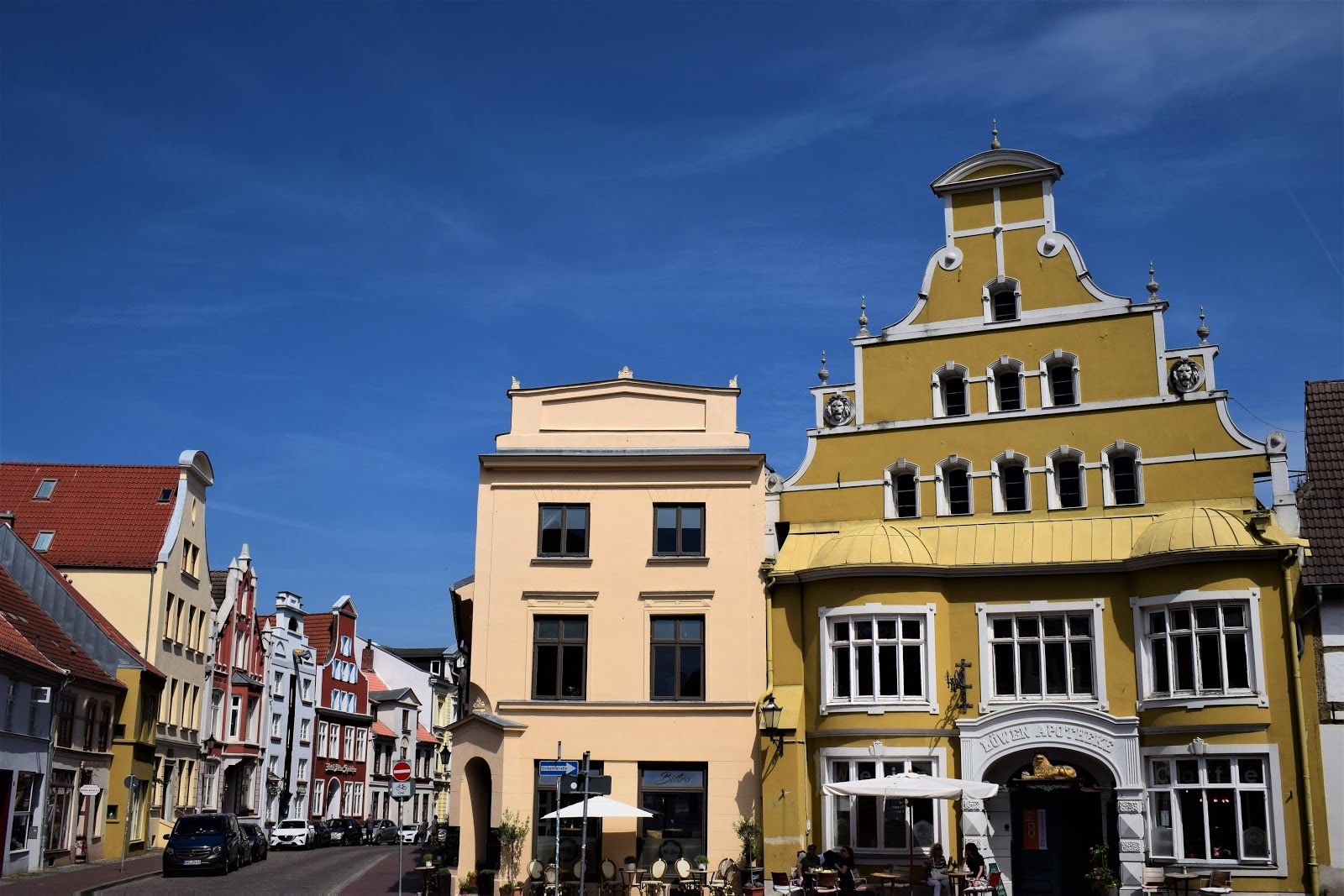
My first acquintance with the city starts on Poehlstraße, where a mixture of red bricked houses and curvaceous roofs reminds me of Lüneburg.


Summer adds its personal note of charm as heavy roses bushes are decorating the entrances into relatively more modern buildings.


A couple of meters away, a big group of French-speaking tourists are gathering to take pictures at the Schweinsbrücke - Pig's bridge - a 19th century bridge over the river Grube.


The architecture of the houses, at a relatively non-eventful time of the day and the week, reveals in its full charm and beauty. On ABC Straße, for instance, many of those houses host at the ground level local art galleries - like the Baltic Soul Gallery - and antiques stores


There is more to admire on Lübsche Straße, where the houses are requesting for more space, as probably the inhabitants themselves, perhaps local merchants, were a social level upper. 


Lacking proper knowledge about the history of the local architecture, I am just using my eyes to work on patterns and styles.  


Amtsgericht building - the district court - displays a relatively controlled geometry, and has a generous backyard that can be visited for free.


The front entrance though, offers a joyous - and sensual too - aproach to life, with probably some beginning of the times Biblical references, when people cared way too much about a fully dressed dress code. 


Rathaus - the city hall - looks relatively modest size-wise, compared to the usual size of such institutions in Germany, a kind of small palace surrounded by same-size 2-storey buildings with restaurants of all sorts. 
Near the entrance to the city hall, a small patch on the walking area reminds that in Wismar was turned one of the first horror movies of all times - Nosferatu, by Friedrich Wilhelm Murnau, in 1922.  On the other side of the square, a noisy group of youngsters, are screaming from the top of their lungs while taking selfies surrounded by some freshly discharged garbage. Maybe there is some dark side of Wismar after all...


The rest of the square keeps the same architectural pace, with the well-coordinated geometry as the main visual feature. Almost every single colourful or bricked-house has an inviting restaurant or cafe or icecream parlour. As Wismar is not a highly touristic place, the prices are moderate and at the first sight, the service looks friendly. You only need to have some extra time to taste each and every one of it, which I am obviously - as usual - out of.


For a couple of minutes, I am mixing up with the local, accompanied by dogs or children or just on their own, crossing the big park. Jogging and cycling is also possible, and it looks like one of the city's biggest natural attractions.


The architecture calls me back on the beaten paths, with more house-admiration on Krämerstraße.


The side-streets, even emptier, are also an attractive view, and I am meeting again the river Grube, this time from the Frische bridge.


At the first sight, the architecture of the Fire Station reminds me of some patterns I've encountered in Hamburg. No wonder, as the architect Arthur Euler was a follower of the red-brick architecture that created in Hamburg the Chile Haus.


Houses with painted facades, giving short insights about their initial destination, remind me of the stories written on the walls of Bavarian cities like Füssen or some Swiss pretty towns.


If until now, the city was almost asleep for the first half of the day, I am about to meet a completely different vibe once I am entering the port area. There is even a New Orleans restaurant, although  if thinking about the live music and energy of the Bourbon street, the comparison is very unrealistic. 


The restaurants are even more inviting, with the predominant meals being fish-based, Italian style.


From the shores, there are several boat round-trips that can be booked. Most of them last around 1h30 and during the summer, are taking place every hour. Besides the relaxing sea view, one can also enjoy different treats.
For instance, the boat trip I booked, was called Pfannkuchen - Pancakes - tour. For the price of the ticket - 20 euro - you got non-stop pancakes feeding, with apple sauce, plus a drink. Could it be more enjoyable - maybe an icecream tour, for the very hot days.


Once in the waters, there is the maritime industry of Wismar which offers a different perspective on the city and confirms its status as an active merchant Hanseatic city. 


The sun is burning hot, and many of the local residents are enjoying the beginning of the summer from their boats.


Nothing is more quiet than the view of the enormous quietness of the sea. I might love to make an ocean cruise one day as well. 


In the middle of the waters, on both sides of the shore, some funky heads on a pole are smiling to me. They are Swedish personalities, representative from the time when Wismar, like Stralsund and other Northern cities, were under the Swedish occupation in the first half of the 17th century. Apparently, this occupation left non-conflictual traces in the local memory, as the Swedish flag can be seen once in a while waved on the windows of the city's buildings.


Stuffed with pancakes and apple sauce, I am returning to the shores, where a local fair is offering various affordable distractions to both children and their parents. For the adventurous at heart, a pirates boat is open to the public, for selfies and some short histories.


But I will stay on the ground for less than 20 minutes, as I decided to make another boat trip to Island Poel, considered Germany's 7th biggest island, the meeting point between the Bay of Wismar and the Bay of Mecklenburg.


With a population of around 3,000 people, living in several small villages, this 40-sqm. island is made of sandy beaches and salt marshes. It's neighbouring Island Walfish, which is well praised for its ornitological richness.


Although the parking spots in the port look busy, there is a certain stillness that breathes on Poel.


As my time is very limited, I am aware that all I can do during this small encounter is to take note of the possible attractions that might make it into a full stay on the island in the near future. 


As for now, I am just happy to breath deep the holiday spirit and dream about a full week of travel one day...That's the role of travel sometimes, to just call your name for even more and more adventures, which is exactly what I am looking for right now.


The architectural style I encounter is relatively simple, more suited for warehouses than for living spaces, but at least there is a hope of natural freshness indoors, as the red stones might keep the hotness at bay for longer than other construction materials. 


For museum lovers there is also a small Inselmuseum - with some miniature land of buildings and historical moments in the backyard, the remains of a Roman wall as well as a lighthouse which is completely out of reach for my short stay. I am not fully convinced that I have to come back, but definitely more research might change my mind one day.


Back on the firm ground and famished, I offered myself the chance of having one of those fish sandwiches - salmon, not hering - that are one of the typical foods for this part of Germany, generously served on the many old-style counters. 
At the end of the trip, I kept asking myself: was it worth to wait for so long to visit Wismar? After all, it was a quite simple trip, without a big overload on the to-do-list, but relatively interesting from the historical and architectural point of view. Every trip is different, and my full day in Wismar is one of the many travel stories in Germany added on my bucket list. 

For more travel stories, follow my YouTube channel: https://www.youtube.com/@ilanatravels

A Walk Through Hansaviertel

Hansaviertel is considered Berlin's smallest district, caught between the River Spree and the Tiergarten. Dramatically damaged after the WWII bombings, it was slowly redesigned and reshaped at the end of the 1950s, beginning of the 60s, thanks to the active involvement of architects belonging to the Bauhaus movement, such as Alvar Aalto, Egor Ereimann, Walter Gropius or Oscar Niemeyer.
The name - Hansaviertel - was as its main streets are named after the big independent trade cities in Northern Europe, a network created from the beginning of the 12th century, such as Hamburg, Anklam, Greifswald or Lüneburg.


I started my walk from the U9 Hansaviertel train station, that was open only in 1961 - when the reconstruction of the area was almost finished. From outside, it is shaped as a rectangular long box, looking like painted in a haste during some creative hobby art workshop. 


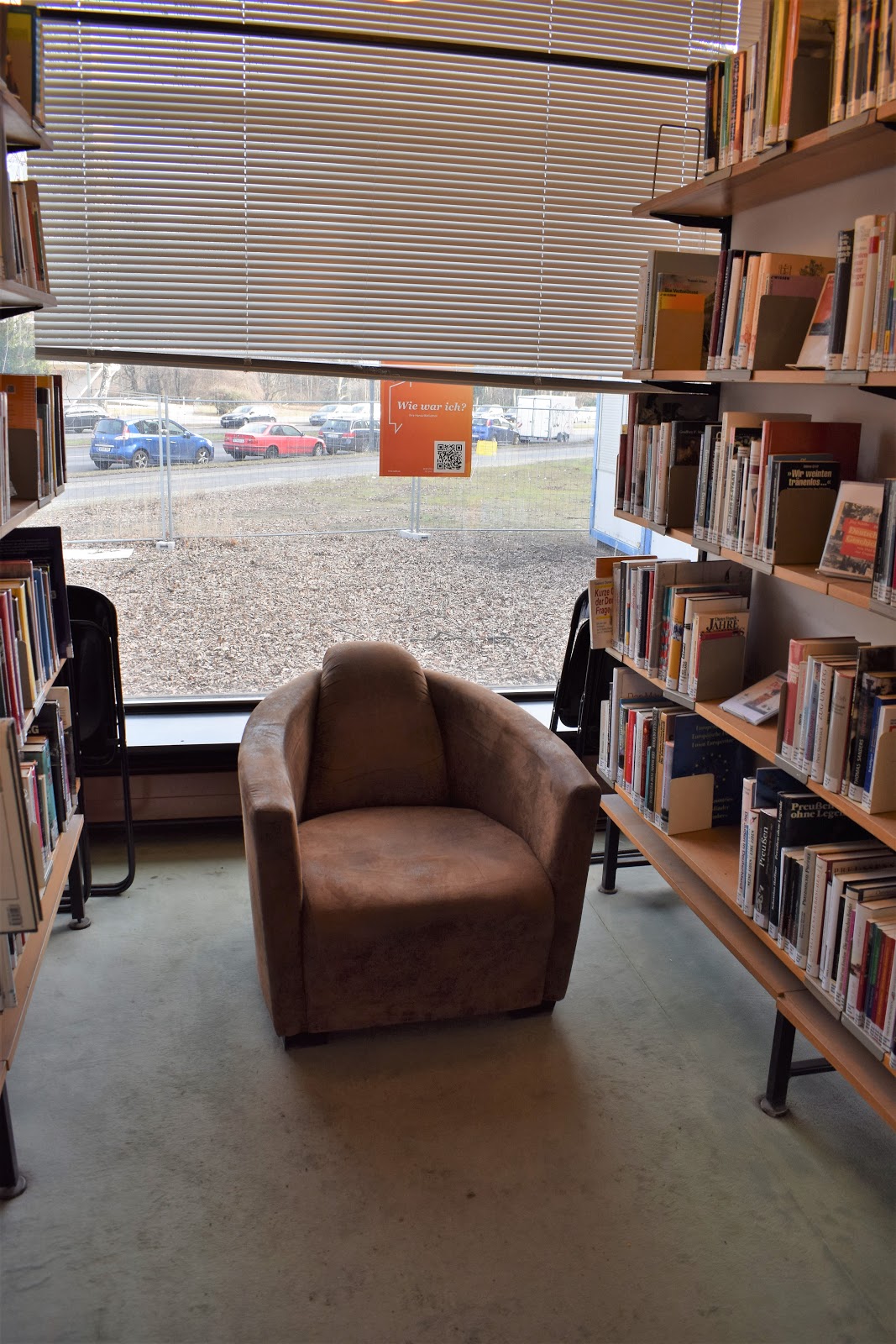
Opposite, there is the Hansabibliothek, one of the first open access libraries in Berlin. It is also rectangularly shaped, and has an interior garden - closed as for now for reconstruction works - where during the summer the visitors can read outside. 


On the other side of the road, on Altonaerstr., GRIPS Theater displays another playful visual outlook. The choice of the graphic representation is not random, as it is a theatre mostly focused on a young and adolescent audience. Most of the plays are exploring the ways in which the public shall be directly involved in the creation of art. Sounds like a place I should come back soon for understanding better this aesthetic perspective.


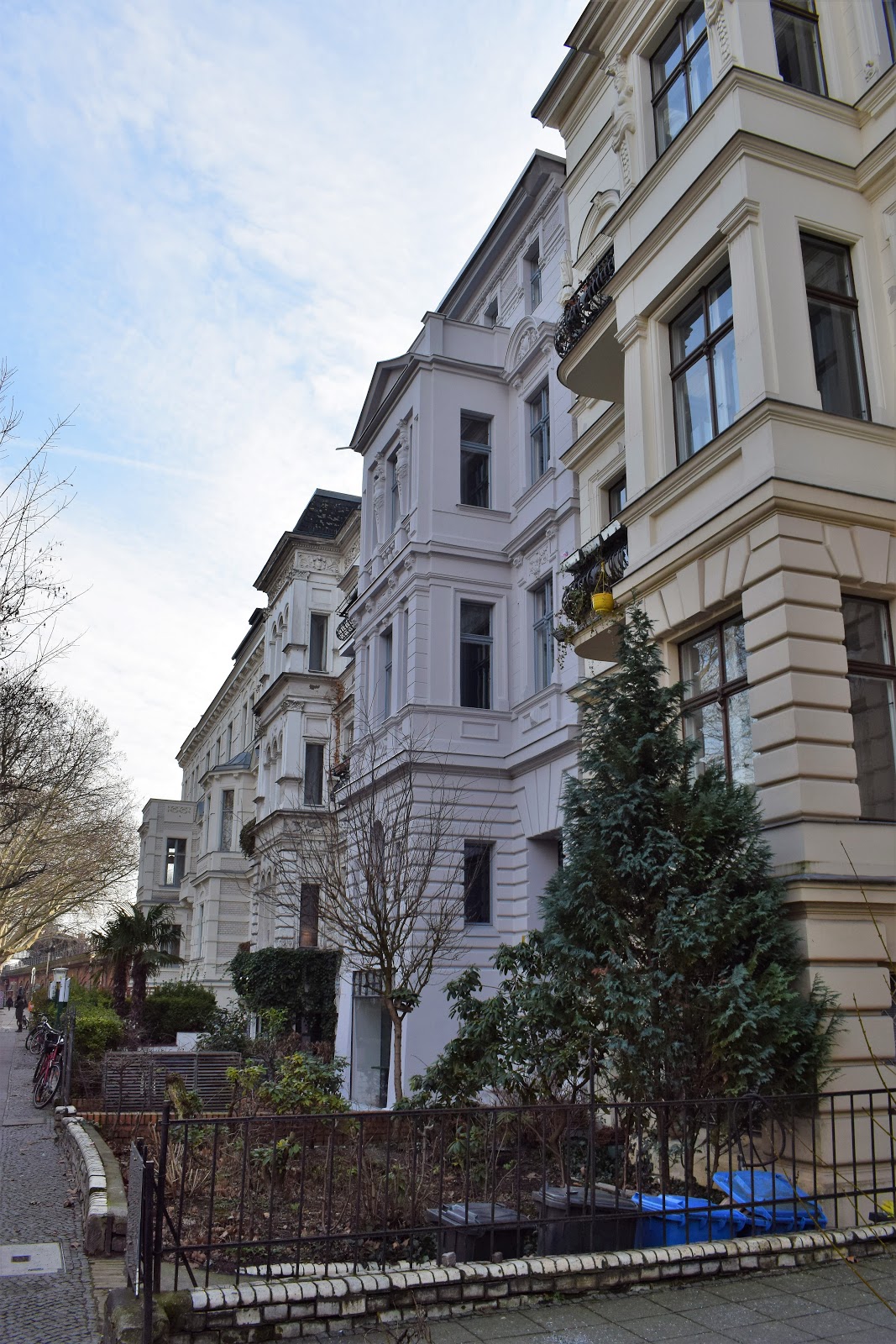
For the next minutes am mostly surrounded by anonymous over 10-storey high blocks of apartments, until I arriving on Flensburgerstr., with its freshly painted classical building, hosting at their ground level small art galleries or children-friendly caffés.


But wandering through this small island of classical old flair doesn't last longer, as I am again kept company by Tetris-like structures, made of relatively affordable materials, aimed at hosting as many families as possible in comfortable yet space-limited apartments.


The splashes of colours create a little diversity in a mass of grey buildings. After the war, West Germany needed to offer affordable accommodation to its middle class, and such real estate projects were the solution. Similarly, in the extreme West side of the city, Gropiusstadt was a offering a much larger alternative, aimed especially at the working class and low-income families.


Happily, there are also couple of human-scale - 2-storey small constructions, that remind me of some part of Siemensstadt that I recently explored.


The brutalist - read ugly - style of the Akademie der Künste might be discouraging a visit, but the concerts and literary events held there - especially on the occasion of the Literature Festival - are high class. I've been here a couple of years ago at a concert by the very talented Sanda Weigl and was impressed by the high technical quality of the sound.


Works of art are spread around the building, adding a creative note to the sober, unfriendly outlook.


When feeling overwhelmed by so many constructions and grey colours, a walk to the small park nearby saves the day, especially when you are too lazy to walk as far as Tiergarten.


Walking the empty alleys give a peaceful, almost poetic feeling.


After a short but welcomed meditative break, I am back in the concrete jungle, trying - unsuccessfully to understand the meaning - technical mostly - of the right side concrete giant tetraeder. Cannot be an elevator or an emergency exit and if it was supposed to be an aesthetical adornment, it went completely wrong. Made a not to self to try to go inside the building one day.


The enormous green spaces surrounding the buildings are well planned, therefore when the concrete is too mentally overwhelming, you have the blue sky to spend your summer days. I can only imagine how everything looks beautified when the trees are getting back their green leaves.


With its welcoming monotony, Hansaviertel taught me some interesting lessons about urban living and Bauhaus architecture and although without the mesmerizing effect the view of beauty instantly produces, it shares the feeling of a silent wisdom and sometimes it might be just enough. 
As I am exploring more and more aspects of the Bauhaus movement, I can't wait to see what intellectual discoveries the next discovery will bring to me.

For more travel stories, follow my YouTube channel: https://www.youtube.com/@ilanatravels