Showing posts with label discover berlin. Show all posts

Tips for Exploring Strausberg bei Berlin


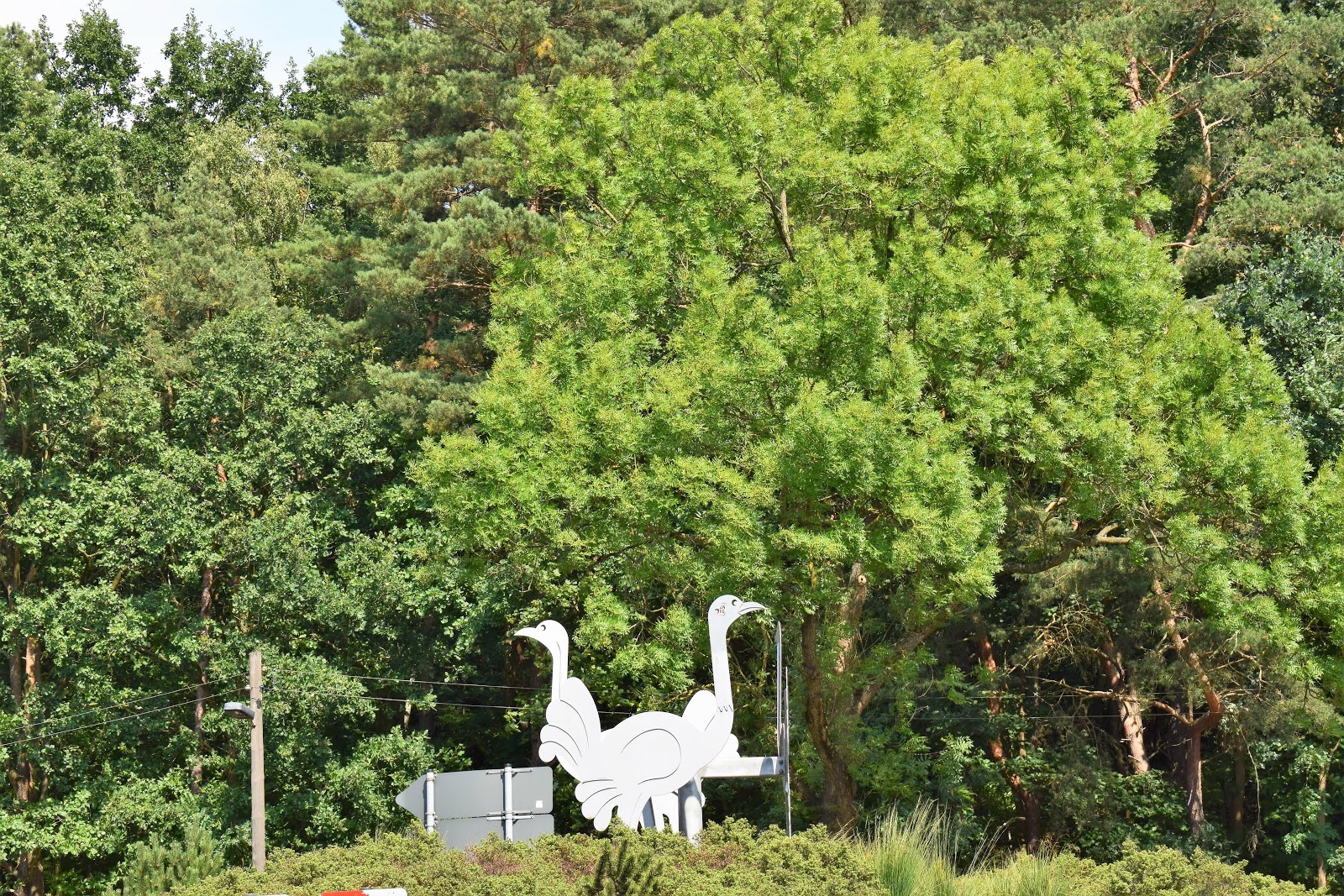
How the straus become the symbol of Strauberg, this relatively unknown part of Berlin which you rarely stop by on the way to best known places like Buckow, is not fully clear. Reacheable from Berlin Zoo station with the S5 S-Bahn line and the ABC ticket, Strausberg (b. Berlin to make the difference to the homonymous from Frankfurt/Oder) may be a pleasant and affordable destination if you are looking spending time in the middle of the nature. With part of it belonging to the picturesque Märkische Schweiz as well as to the equally picturesque Märkische Oderland, it has a lot of free time activities to keep you and your children busy for at least one full day.


The journey lasts around one hour, passing near small villages that make you forget that you are still in the big capital city. Berlin and Strausberg are connected via train lines since 1948. Since the 18th century, Strausberg used to be a so-called garnison city (like Wünsdorf, another interesting destination near Berlin I will feature in one of my next posts) and remains until today one of the biggest German Army headquarters in Germany' East. What we see upon arrival though, besides the blocks of flats GDR-style, are alleys bordered by old trees, an invitation to thoughtful walks.


The old walls are not only well preserved, but integrated harmoniously into the contemporary landscape. It gives to some part of the city the air of a fairy tale with an urban background.


In some cases, the old walls were converted into entrances to the relatively new - in centuries' time - blocks of buildings.


When I drove the first time through Strausberg on the way to Buckow, I noticed a group of visitors taking pictures in the front of a sailor statue. Apparently, this character, which reminds of the revolt of the Kiel sailors in 1918, in solidarity with the November Russian revolution is a local attraction, as people were this time also in the front of it for photo opportunities. The work belongs to Hans Kies, who also created the memorial art at Buchenwald camp, a personality - both political and artistic - among the GDR artists of the time. 


Although most of the city looks designed in the spirit of the late communist 1970s, there are still some old corners reminding of other times, especially on Bebelstraße.

A couple of meters away on th same street, there is the local museum. The name of the street is not accidental, as here, in 1898, August Bebel held a conference and the street was named in the honor of the founder of the German social-democracy.


Although I love history and to discover historical episodes during my travels, summer for me is mostly made for exploring nature and hiking. Strausberg has plenty of it to offer, starting with a small boat tour for 1.50 Euro one way, crossing Straussee.


On the other side, you can make a round hiking near the lake, with views over the city. A very creative idea was to offer once in a while some short explanations about the buildings and areas visible from the other side of the lake. For instance, the electricity factory or the Fishermen' quarter. Learning through hiking was a really interesting idea and experience.


The trail is relatively easy and all you need is a good pair of shoes and the desire to keep walking. You can also bike, walk your dog and carry your baby in a pram. There is no limits to your desire to be in a good shape. 


On the shores, people are sunbathing or picnicking, listening to music or just enjoying their own company.


Some lucky ones do have boats that brings you fast in the middle of the lake, with views on both sides and the immensity of the water surrounding.


Hiking around the lake lasted around 2 hours of slow pace, but it built up a lot of positive energy and strength, not only in my muscles.


Time for a tasty reward: an ice coffee at the welcoming Milchbar, near the city hall, a place where besides various bio and natural treats you can also have breakfast from 9.30 to 14.00. The service was friendly too and they do have some great icecream sorts worth to try at least once.


The city hall - Rathaus - building looks like a big mansion, elegant and with clean architecture lines.


We want to explore a bit more, and we arrive again in an area surrounded by old city walls intertwined with the modern one-storey houses.


The views from the Panorama viewpoint are smoothing and postcard worth.


A couple of meters away, on the lake, there is a boat competition taking place, on the occasion of the Dragon festivities, a local benchmark in the list of summer events in the city. Besides, the Volkspark is turned into a great playground.


The most surprising parts of Strausberg though are on the sideroads less travelled: Kürtzestrasse has some lovely timbered-houses built on a strong stone foundation and with colourful small doors that look simply lovely.


This part of the old city is by far my favorite and I slow my pace to admire one and every single one of the beautiful colourful houses.


In a short amount of time I am on Großstraße, the avenue where most shops are concentrated, many of them offering products, especially fashion-wise which remind of old, unfashionable times. In one small interior yard, there is the Alter Brauhof, a reminder of the glorious brewery times of Strausberg. In the Middle Ages there used to be at least 60 breweries, not few of them around the Dominican monastery. Following the 30 Years War (1618-1648) most of them were destroyed and 1880 marks historically the end of the local beer production. The building reminds as a historical memory, that can be admired from the white covered tables of the Italian restaurant nearby, apparently Strausberg's best foodie destination. 
Nearby, the Lindenplatz was quietly empty, but locals say that on Tuesdays, when the weekly market takes place, there is a completely, lively ambiance.


With its new and old part of the city, its beautiful nature and calming view of the lakes, Strausberg was a really pleasant travel surprise. Most probably, when I will be around the next time, I would prefer to stop and see more of it instead of just crossing it in a big hurry, lured by other unknown more appealing destinations.

Exploring Gropiusstadt

An agglomeration of over 18,500 social flats, Gropiusstadt is a place where you rather live but rarely go to visit. Unless you are interested in architecture and in a social history of Berlin that you don't read it too often in the usual travel guides about the city. Part of the Neukölln borough, this part of the city developed as a working-class area since the beginning of the 19th century. 
After the WWII, the urban planners realized that the constructions were not appropriate for the needs of the working class and requested the famous Martin Gropius, the founder of the Bauhaus school of architecture that leaved Germany for the US during the war, to plan a new urban settlement. The works took place between 1962 and 1975, resulting in a modern agglomeration aimed to host 36,000 people. Unusually for Berlin, there are sky scrappers everywhere, part of larger units including school, kindergarten, parks and community centers. 
Besides its relevance for the architecture lovers, Gropiusstadt - Gropius city - become famous for being the residence of the young rebels of the Germany, mentioned in Christiane F. book 'Wir Kinder von Bahnhof Zoo', a revelation book about drugs abuse among youngsters in the Western part of Berlin.
Although I've visited this area before, a couple of weeks ago I decided to cover it systematically, starting from the three main U-Bahn (metro) stations - on the U7 line.
First stop: Johannisthaler Chaussee. The metro station looks desolate, aesthetically unwelcoming, but it makes you forget the ugliness by leading you directly to a center of consumption, a shopping center - Gropius Pasagen - newly built, replacing the one in use before the Berlin reunification.
We turned down to Kirschnerweg and Anita Nemitz Weg, our presence becoming smaller and smaller in the middle of the 10+-store buildings. For Western Berlin and for West Germany in general such construction were just bold at the time as except maybe Frankfurt am Main, you can rarely see buildings more than 5-6-store. Many of them were looking quite worn out though, with black patches of humidity against the dirty white facades. 
The buildings are geometrically set shoulder-to-shoulder, creating at least for the camera, an interesting impression. Although I find the game of angles and volumes quite fascinating, my personal choice remains for the small houses with big gardens, private islands in the outskirts of the city.
The monotony is happily disrupted by blue balconies - some buildings on Johannisthaller Chaussee - or some modest works of art in the middle of green areas in between the concrete constructions. In the middle of the week, almost lunch time, there were not too many young people around, but I can imagine this place full of children roaming around in the summer and early autumn. The intermediate spaces between buildings have a mediation role to bring together people from the area and create small communities. 
The wave-shapes of some facades create individuality for some buildings, but also offer a creative use of the casual construction materials.
Tucked between concrete, there is an area that probably was originally built before the Gropius plans took shape. Around Severingstrasse, there is a relatively modest area where individual families occupy one house, deserved by a garden. My healthy alternative to the lack of privacy of the huge social units.
The natural area, which was generously maintained all over this part of Gropius Stadt, brings balance and fresh air in an area predominated by heavy grey buildings. It also offers a private space and area for reflection and meditation. By comparison, in the former Eastern European blocks of flats areas - the so-called Plattenbau (more about them in a future post) - the constructions ate almost entirely the green space. 
The next stop, one metro station away: Lipschitzallee. It looks better kept but still with tiles that reminds you hospitals and nothing pleasant for the eyes in general.
In this part of the city, the buildings are more organised according to community functions, with Gemeinschaftshausen (Community houses) in the middle of radial disposition of buildings hosting libraries, religious spaces, libraries, children meeting areas.
The buildings are even higher, with blocks added in a creative - even colourful way. This part looks more modern and more attractive, with more diversity in terms of volumes and disposition of the buildings. The buildings also look better maintained.
Another feature of the area are the many open spaces and markets, with abundant wild vegetation.
The last stop of this tour: Wutzkyallee metro station. It looks much better, not only because of the blue tiles, but also for the various pictures presenting various stages of construction of the area, where Gropius himself appears in the middle of the plans or observing the various developments.
Statues - inspired by the Eastern Island works, maybe - are placed in the front of the school. There is also a Neighborhood center - Nachbarschaftzentrum - aimed to create the social net of human relationships. 
My favorite part of this area, maybe from the entire Gropius Stadt, is around the Theodor Loos Weg, for the the pastel and moderately colourful balconies.
My personal tour of Gropius Stadt lasted more than an hour, during which I felt like a visitor in a completely different world. Although I would not love to live here, the social and architectural experiences revealed just another piece of my beloved Berlin.

Exploring Ostkreuz

As I often travel around Berlin, it happens to pass very often near Ostkreuz Berlin neighbourhood by train speed, but I never dedicated enough time to explore it properly. The many colourful walls or the glittering sea that you can see from the train were tempting enough to make me spend one full day walking its streets and taking as many pictures as possible of the most interesting corners. But before doing this, I had to find my way through the relatively complicated maze of the Ostkreuz train station...
Once out under the late autumn sunny sky, I made the tour of the big park on Matkowskystrasse, discretely observing the ping-pong competition enfolding, trying not to disturb the youngsters laying on the pavement with their bottles and loud music on the side. Open air party? Anyone is invited today.
To keep the spirit up, the colourful walls bring life to the many dilapidated entrances. It is weekend and people hurried up out of the house, enjoying the rich food opportunities lined on Lenbachstrasse, from icecream parlors to small restaurants or the home-made food from Zebrano Velicious.  
If you raise your eyes, you can see some interesting decorations on the highest buildings, and if you are looking for some cultural entertainment, there is even a theatre Vebereck. Tourists discover the area together with the locals, using the relatively cheap accommodation available here. As the area is connected through S-Bahn to the main city attractions, you don't necessarily need to pay for a central location. You can use the money for more interesting things, like trying the foodie attractions on Neue Bahnhofstrasse: from a falafel kiosk to a Vietnamese pho or vegan cakes, you can have a tour of the world in a couple of dishes. Burger Ring offers even a hummus burger, if you are interested in some fusions.
Keeping in mind all these destinations for later in the day, I continue my wandering around Ostkreuz, and in my effort to make connections between different areas, I am crossing the Boxhagenerstrasse, the fancy Friedrichshain avenue not only for food, but also for alternative stores and fashion. After all, I am not completely new in the area, it seems. For now, I am walking direction Lichtenberg, crossing the bridge over the train station lines where, as usual in Berlin, intensive work is going on for repairing or extending the train lines. The beautiful sky compensates the view of the ugly construction site, but I am trying to go as soon as possible on the other side of the huge bridge crossing a, as for now, no-man's land. 
Ten minutes later, there is a different landscape waiting at the other end of the bridge. First, you have a lot of green and clear waters, as I am landing now in the Rummelsberg part of Berlin. Second, there is a new born view of Berlin, that you can often encounter when visiting former communist areas: the new Berlin architecture, of black and white buildings with Perspex balconies, rows of identical squared buildings. 
You can still find remnants of another era, like a former swimming complex abandoned now, or a party boat, but the landscape is changing little by little into a very modern, and I suppose expensive too, residential area.
If you are bold enough, you can rent a kayak for your own tour around the lake to observe closer the new realities. As for me, I am using my time for touring the park, together with the other families with children, with or without bikes, that choose to spend their weekend outdoors. The Rummelsburgersee is a beautiful and calming background, and you can feel the new vibes everywhere. Ostkreuz, as many other places in Berlin, will change a lot in the next 2-3 years.
I continue to notice the messages of new beginnings for this area, further on on Hauptstrasse, a street crossed by fast yellow trams. The other neighbour close by is Köpenick, which I visited several times since moving here and which I've found interesting for the mixture of old culture and picturesque nature. Once on Nöldnerstrasse, one feels back in time, a couple of decades back our current 2016, in the middle of old buildings, embellished only by creative street art.
One of the building I've seen often from the windows of the train, and was always intriguing for my inner architect lover, is situated at the end of Nöldnerstrasse. A social building, created by the optical illusions of the covering panels. Viewed from the train speed the effect is more spectacular, but even from closer it creates an interesting perspective, although the choice of colours is not necessarily my favourite.
Besides the feeling of new and change that you can feel in the air, Karlhorstrasse breath differently, with its laced-like decorations of the facades. The impression continues on Turmschmidtstrasse, where you can also see some Art Nouveau designed signposts. The bookstore Paul+Paula looks like a cozy place to spend some time during the winter, followed or before some snacks at Brot und Küchen (Bread and cakes) on Pfarrstrasse
There is another reason why I decided to cover extensively the Ostkreuz neighbourhood today: its special kind of street art I've read about and spotted during my train rides too. There are no specific directions helping you to find it, and after a lot of walking during which I was almost sure that I might skip this part of the program, I was lucky enough to discover one of most colourful streets of the city. 
The attractive and creative art - half-way between dream and utopia -, as elaborated as any piece of art you can find in a museum, is colouring the ugly walls and weed-invaded streets of Tasdorferstrasse, Wiesenweg or Wartenbergstrasse. Most streets are either abandoned or hosting car repair stores, not a good idea to visit it at night, but if you want to see the spectacular street art, you should visit only by day. 
In some cases, the art is so elaborated, that I wish I can keep in my mind as many features of the style as possible, for being able to recognize him - or her - later on. I can resonate with the irony and the magnifying glass through which some of the contemporary realities are perceived.
The day was pretty exhausting, with many different things to see and discover, and a lot of non-stop walking and search for the best photographic angle. For my well-deserved lunch, I have a stop at the newly open Harapeco on Neue Bahnhofstrasse for some Japanese original food - forget the sushi, please, this is for first-time tourists! I am happy to test their noodle okonomiyaki, a specialty originally from the Hiroshima area, a savory pancake grilled, with various ingredients you can choose yourself and soaked in a special sauce. In Japanese, okonomi means how you like it, and yaki - grill. In a free interpretation, a grill of your favourite ingredients. The prices are middle, but they really deserve it: it tastes delish, and the sauce gives a particular taste that you can hardly identify with anything else you had before. The matcha latte accompanying my meal was also well done, with the special taste of green tea maintained despite the milk addition, which is not always the case in the local variants of this beloved drink.
When time has come to leave Ostkreuz, ready for a new adventure finding my line at the train station, I am happy that I made it through this area, step-by-step, just in time before tremendous urban changes are about to take place in the area. I wish I can make a tour in the next years, but I hope at least some of the foodie places will remain unchanged or at least, will get even better.